

Moving Beyond the Averages
For generations, farm management has largely relied on standardized practices. If a field needed nitrogen, the entire field received the same uniform application, regardless of the subtle variations in soil quality, topography, or moisture retention across that acreage. This approach made sense when data was scarce and broad-scale equipment was the only option. However, agriculture is evolving. Today, farming by averages often means over-applying expensive inputs in some areas while under-nourishing crops in others.
Precision agriculture changes this paradigm entirely. At its core, precision agriculture is a farm management strategy that utilizes information technology and field data to ensure crops and soil receive exactly what they need for optimum health and productivity. The underlying philosophy is straightforward: apply the right treatment in the right place, at the right time, and in the right way.
By shifting from a whole-field approach to site-specific management, producers can significantly optimize their resources. This is not just a matter of improving yield monitors or buying new tractors; it is a fundamental shift toward data-driven agriculture. The stakes for this transition are high. Global studies consistently demonstrate that improving agricultural land management can significantly reduce environmental footprints while maintaining the food security necessary for a growing population.
The Global Reality of Smart Farming
A common misconception is that precision agriculture is exclusively designed for massive, industrial-scale operations in places like the American Midwest or the expansive plains of Australia. While large-acreage row crop farmers were certainly among the early adopters of technologies like GPS-guided auto-steering, the principles of smart farming are highly scalable and increasingly borderless.
Around the world, agricultural contexts vary wildly, but the need for efficiency remains constant. In Southeast Asia, rice farmers are implementing water-level sensors to optimize irrigation timing, preventing water waste and reducing methane emissions from flooded paddies. In regions across Africa, mobile technology transforms traditional practices by delivering localized weather forecasts, real-time market pricing, and agronomic advice directly to smallholder farmers via simple SMS text messages.
This democratization of data proves that precision farming does not always require a million-dollar equipment fleet. It requires the right information applied at the right moment. Global organizations are recognizing this shift and are actively making digital tools accessible to farming communities of all sizes, ensuring that the benefits of agricultural optimization reach those who need it most. Whether managing a five-hectare plot of vegetables or a five-thousand-hectare wheat operation, the integration of targeted data can profoundly impact a farm's viability.
Core Technologies Driving the Shift
To understand how precision agriculture functions in the field, it is helpful to look at the primary technologies making this localized management possible. Rather than viewing these tools as separate gadgets, it is best to view them as an interconnected system of data collection, analysis, and application.
Soil Mapping and In-Field Sensors
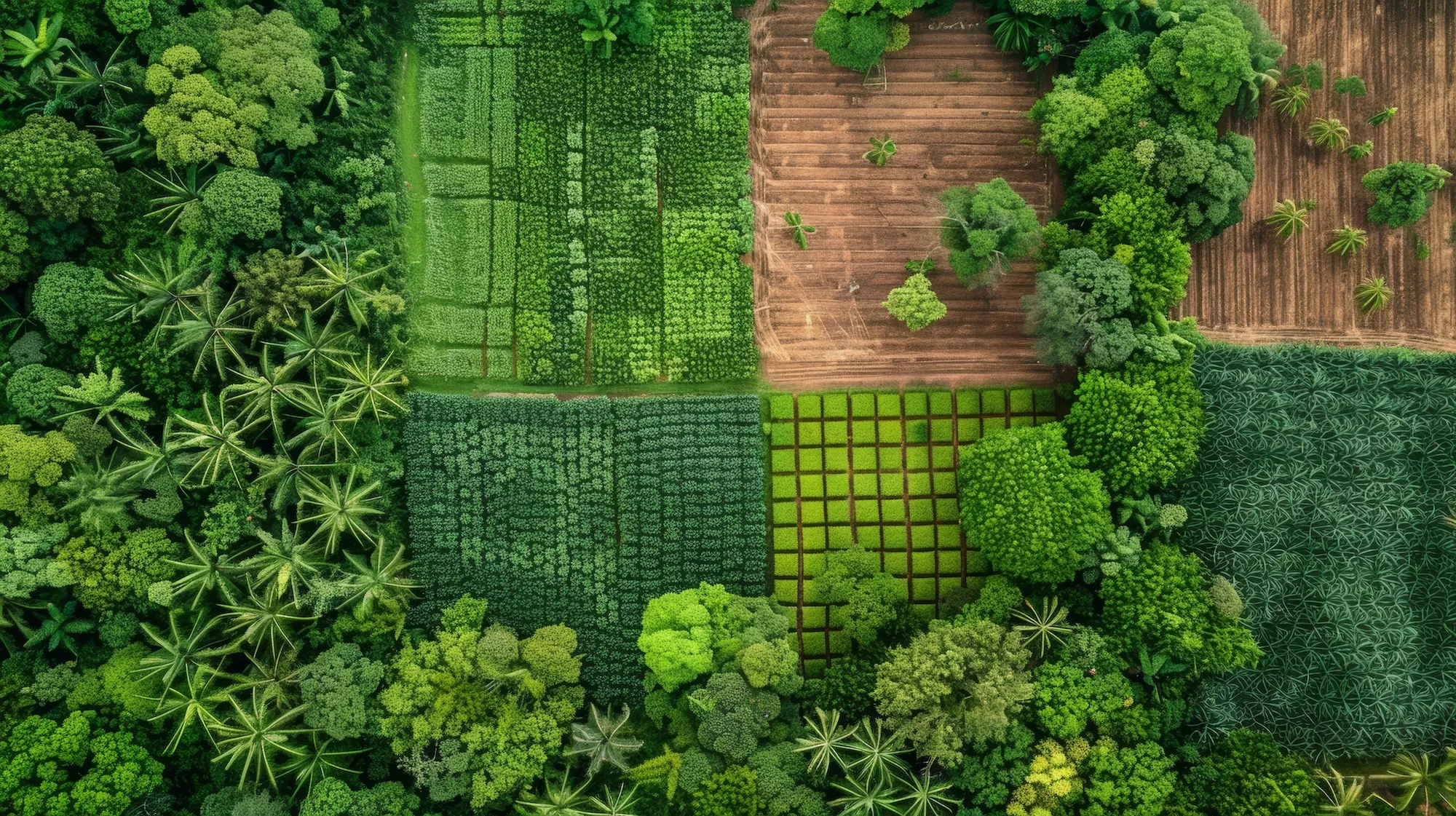
Everything in agriculture begins with the soil. Historically, a farmer might pull a few soil samples from a large field, mix them together, and send them to a lab to get an average nutrient profile. Today, grid soil sampling and electrical conductivity mapping allow producers to create detailed, high-resolution maps of their fields. These maps reveal the hidden management zones within a single boundary—showing exactly where the soil is sandy and drains quickly, or where heavy clay retains moisture and requires different nutrient management. Furthermore, in-field sensors can monitor real-time soil moisture and temperature, allowing farmers to irrigate only when the crop is actually experiencing water stress.
Satellite Imagery and Drones
While soil mapping provides the ground truth, remote sensing provides the larger perspective. Satellites and agricultural drones serve as a farm’s eyes in the sky. By utilizing specialized cameras to capture the Normalized Difference Vegetation Index (NDVI), these tools measure the density and health of the crop canopy. Utilizing unmanned aerial systems and smart technologies allows farmers to identify early signs of nutrient deficiency, pest pressure, or irrigation leaks long before they become visible to the human eye from the edge of the field. This early detection enables rapid, localized intervention.
Variable Rate Technology (VRT)
If soil maps and drone imagery provide the diagnosis, Variable Rate Technology is the prescription. VRT allows agricultural equipment—such as planters, fertilizer spreaders, and sprayers—to change their application rates automatically as they move across the field. Connected to a GPS receiver and guided by a digital prescription map, the equipment applies more seed or fertilizer in highly productive zones and reduces the rate in low-yield or sensitive areas. This is where variable rate technology and targeted applications directly translate data into physical action, ensuring every dollar spent on inputs is utilized efficiently.
How to Begin Applying Precision Agriculture on Your Farm
The sheer volume of available technology can be overwhelming for farmers looking to modernize their operations. The key to successfully implementing precision agriculture is avoiding the temptation to buy expensive hardware without a clear strategy. Transitioning to smart farming is a steady journey of integrating actionable data into your daily routines. Here is how you can begin the process methodically.
Identify Your Primary Bottleneck
Before investing in new systems, take a critical look at your current operation. Where are your highest costs? Where are your yields consistently suffering? For some farms, the most pressing issue is the rising cost of nitrogen fertilizer, making nutrient management the top priority. For others in arid climates, water scarcity dictates that irrigation efficiency is the critical bottleneck. By clearly identifying the specific problem you need to solve, you can target your investments toward technologies that will provide an immediate and measurable return, rather than adopting technology simply for the sake of having it.
Establish a Baseline with Data Collection
You cannot effectively manage what you do not accurately measure. Before you can apply variable rates to your fields, you must understand the existing variations. Start simple. Invest in comprehensive grid or zone soil sampling to map out your nutrient profiles. Begin recording historical yield data if your harvesting equipment allows for it. Even keeping meticulous digital records of your historical crop rotations, weather patterns, and input applications builds a foundational database. This historical context is what makes future predictive software valuable.
Utilize Accessible Mobile Applications
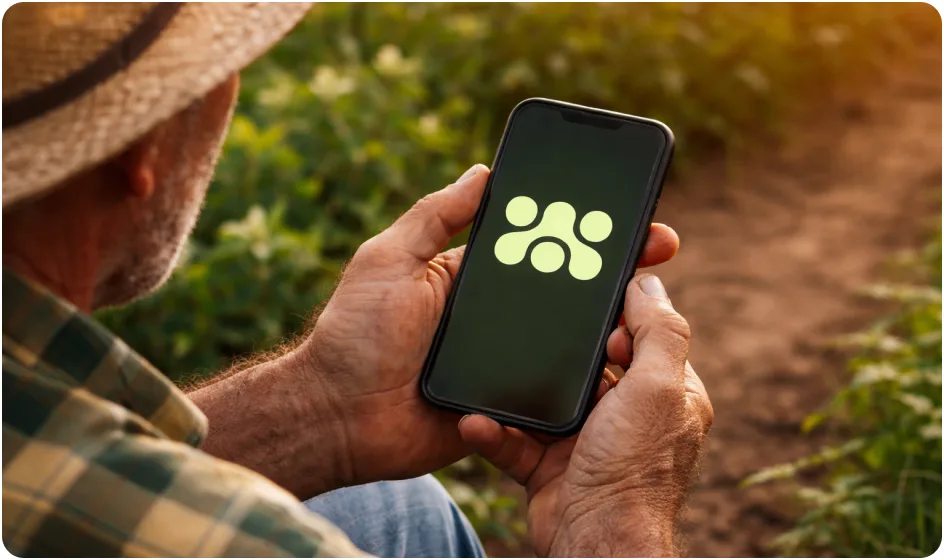
You do not need a fully automated tractor to participate in data-driven agriculture. Countless mobile applications are available today that require little more than a smartphone. Farm management software allows you to digitize your field records, track inventory, and monitor daily tasks from anywhere. Advanced weather applications provide hyper-local forecasting, helping you determine the absolute best window for planting or spraying. Starting with software helps train your management mindset to rely on real-time data before committing to heavier hardware investments.
Gradually Integrate Hardware and Automation
Once you have a firm grasp on your field data and management software, you can begin introducing hardware solutions. A common and highly effective entry point is GPS guidance systems and automated steering for tractors. Auto-steer reduces operator fatigue, prevents overlapping passes during tillage or spraying, and immediately saves fuel and machine hours. Once you are comfortable with guidance systems, you can step up to VRT for your planters and sprayers. By aligning technology upgrades with holistic climate-smart agriculture strategies, producers can build operational resilience steadily over several seasons.
The Return on Investment: Why Make the Shift?
The transition to precision agriculture requires an investment of time, education, and capital. However, the return on that investment is multifold, spanning both immediate economic benefits and long-term ecological sustainability.
Economically, the impact of precision farming is felt directly in the profit margins. By utilizing VRT and precise data, farmers routinely reduce their overall use of seeds, fertilizers, and crop protection chemicals. Because inputs are only applied where they will actually be utilized by the crop, waste is drastically minimized. Simultaneously, yields often increase because highly productive zones are no longer held back by average, whole-field application rates.
Environmentally, the benefits are equally profound. When agricultural inputs are optimized, the risk of excess nitrogen and phosphorus running off into local watersheds is significantly reduced. Precise irrigation scheduling conserves vital aquifers, and optimized tractor routing reduces fuel consumption and soil compaction. Smart farming allows producers to do more with less, preserving the land for future generations while maximizing its current potential.
Navigating the Future of Farming
At Valora Earth, our goal is to help farmers make better, more informed decisions. We understand that adopting precision agriculture is not a singular event, but a continuous evolution of your farm management practices. It requires patience, a willingness to learn from the data, and the flexibility to adapt to new insights.
You do not need to overhaul your entire operation overnight. Start by asking questions about the variations in your fields. Start measuring the factors that impact your bottom line the most. As you slowly integrate these data-driven practices, you will find that precision agriculture is not just a technological upgrade—it is a fundamentally clearer way of understanding the land you steward.


 Use Valora On-the-Go!