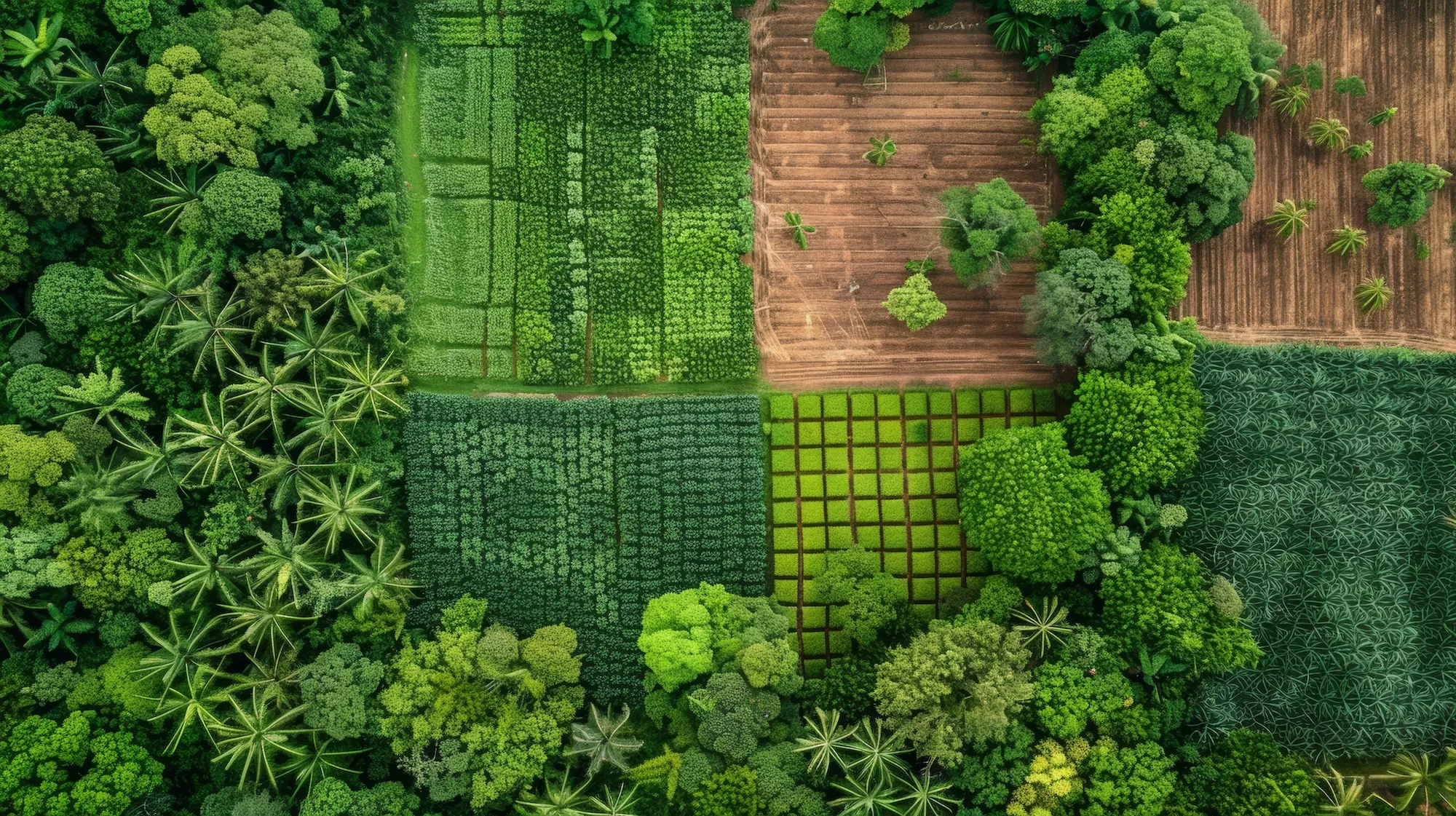


Water is the quiet decision behind almost every harvest. Get it right, and crops reach their potential even in a dry year. Get it wrong, and you waste fuel, fertilizer, and money—sometimes without knowing it. Agriculture already accounts for roughly 70 percent of the world's freshwater withdrawals, and in lower-income farming regions that share can climb to as much as 90 percent. As more regions face water stress and rainfall grows less predictable, the farmers who thrive will be the ones who manage water deliberately rather than by habit.
Good water management isn't about buying the most expensive system. It's about understanding what your crop needs, choosing an irrigation method that fits your land and budget, and building simple routines that reduce waste. Let's break that down.
Start with what your crop actually needs
The most common irrigation mistake is watering on a fixed calendar instead of watering on demand. Plants don't drink by the clock—their needs shift with the weather, the growth stage, and the soil beneath them.
Two questions should guide every irrigation decision. First, how much water has the crop lost since you last watered? That loss—a process called evapotranspiration, driven mostly by heat, wind, and sunlight—is what you're replacing. Second, how much water can your soil actually hold? Sandy soils drain fast and need small, frequent watering; heavier clay soils hold moisture longer and reward less frequent, deeper application.
You don't need laboratory equipment to answer these questions. A simple habit of checking soil moisture by hand or with a low-cost probe, combined with an eye on the local weather forecast, gets most farmers most of the way there. The goal of sound on-farm water management is to refill the root zone when the crop needs it—no sooner, no later. Watering too early wastes water and can drown roots. Watering too late stresses the plant and cuts yield.
Know your irrigation options
There is no single "best" irrigation method. Each has a place, and each trades cost against efficiency. Understanding the three main families helps you choose well.
Surface irrigation
Surface methods—flooding fields or running water down furrows—are the oldest and most widespread approach worldwide. They require little equipment and no pumps or pressure, which keeps upfront costs low. That's a real advantage for many smallholders.
The trade-off is efficiency. A large share of the water evaporates, runs off, or sinks below the roots. According to field-level efficiency figures compiled by the FAO, well-run surface systems typically deliver only 50 to 60 percent of applied water to the crop. Careful land leveling, shorter furrow lengths, and better timing can push that number up considerably—often the cheapest efficiency gain available to a surface irrigator.
Sprinkler irrigation
Sprinklers spray water over the canopy, mimicking rainfall. They suit uneven terrain where surface flooding is impractical and work well for many field and forage crops. Efficiency usually lands well above surface methods, though wind and hot, dry air can carry away a meaningful share before it reaches the ground. Sprinklers need a pressurized supply, so energy cost is a factor worth calculating before you invest.
Drip and micro-irrigation
Drip systems deliver water slowly and directly to the root zone through a network of tubes and emitters. Because almost nothing is lost to evaporation or runoff, drip can reach around 90 percent field efficiency. A global review of drip research found it can cut water use by 30 to 50 percent compared with traditional flooding, often while improving yield and quality. In the Indian state of Punjab, for example, switching from gravity-fed irrigation to drip reduced crop water demand by roughly a third.
Drip also enables fertigation—delivering nutrients dissolved in the irrigation water straight to the roots, which cuts fertilizer waste. The main barriers are upfront cost and maintenance: emitters clog, and filters need cleaning. For high-value crops and water-scarce regions, though, the returns are hard to ignore.
Match the method to your context
The right choice depends less on which system is "most advanced" and more on your crop, climate, water source, and cash flow.
In arid regions, the case for drip is strongest. Studies across northwest China's dry farmland show drip under mulch saving 30 to 50 percent of water while sustaining yields, because so little is lost to a thirsty atmosphere. A California field trial on sweet corn found drip cut water use by about 37 percent while slightly raising yield—gains the researchers linked to more uniform water and fertilizer delivery.
In humid regions with reliable rainfall, the calculation changes. A farmer there may only need supplemental irrigation during dry spells, and a lower-cost sprinkler or improved surface system can make more economic sense than a full drip installation. Terrain matters too: sloped or irregular plots favor sprinkler or drip, while flat, well-leveled fields can run surface irrigation efficiently.
Cash flow is the quiet deciding factor. A system that saves water but drains your working capital isn't the right system. Many farmers do best by upgrading in stages—improving surface efficiency first, then adding drip to their highest-value plots as returns allow.
Watch the efficiency trap
Here's a counterintuitive truth: making irrigation more efficient doesn't automatically save water at the regional level. When farmers use less water per hectare, many respond by planting more land or switching to thirstier crops. The result is that total water use can stay flat or even rise—a pattern researchers call the Jevons Paradox. As one CGIAR analysis notes, efficiency gains can backfire if they simply expand the total area under irrigation, while problems like soil salinization and waterlogging continue to degrade land. In fact, an FAO review of the evidence concludes that better on-field efficiency frequently fails to cut water use across a whole basin, because the water "saved" is quietly redirected to grow more.
This matters most where farms draw on shared groundwater. Groundwater already supplies about a quarter of irrigation water worldwide, and across parts of South Asia, decades of low-cost pumping have drawn aquifers down faster than rain can refill them. Groundwater is a genuine lifeline—when managed sustainably, it can lift farming communities out of poverty—but it is easy to overdraw. The practical takeaway for any farmer is to treat efficiency as a way to grow more with the same water, not as a license to pump without limit. Your well, and your neighbors', depend on it.
Low-cost practices that stretch every drop
You don't need a new system to manage water better. Several habits pay for themselves quickly.
Mulch the soil. A layer of straw, crop residue, or plastic film slows evaporation, keeps roots cooler, and suppresses weeds that compete for moisture. In dry climates, mulching paired with drip is one of the most reliable water-savers available.
Harvest rainwater. Simple ponds, tanks, and contour bunds capture rain when it falls so you can use it when crops need it. This buffers you against dry spells and reduces pressure on wells and rivers.
Try deficit irrigation. For some crops, deliberately applying slightly less water—during growth stages when the plant is less sensitive—saves water with little or no yield loss. On winter wheat in the North China Plain, deficit irrigation saved 25 to 75 percent of water at various growth stages without significant losses in yield or profit. It takes local knowledge to do well, but the savings can be substantial.
Maintain the system you have. Leaky pipes, clogged emitters, and broken sprinkler heads waste water invisibly. A short weekly inspection often recovers more water than any new equipment.
Let data guide the decision
The next frontier in water management is information. Soil-moisture sensors, weather-based scheduling, and mobile advisory tools help farmers water precisely when and where it's needed. A recent review of smart irrigation highlighted a program in India where sensor-based scheduling raised yields by around 30 percent while cutting water use by up to 70 percent.
You don't need a full sensor network to benefit. Even a reliable local forecast and a consistent method for checking soil moisture turn guesswork into decisions. That's the heart of good water management: replacing habit with evidence, one field at a time.
The bottom line
Water is your most valuable and most vulnerable input. Start by learning what your crop and soil truly need. Choose an irrigation method that fits your land, climate, and budget—and remember that the most efficient system is the one you can afford to run and maintain. Layer in low-cost practices like mulching and rainwater harvesting, keep an eye on the shared resources you depend on, and let data sharpen your timing.
Every farm is different, but the principle is universal: manage water on purpose, and it will reward you with steadier yields, lower costs, and greater resilience in an increasingly unpredictable climate.