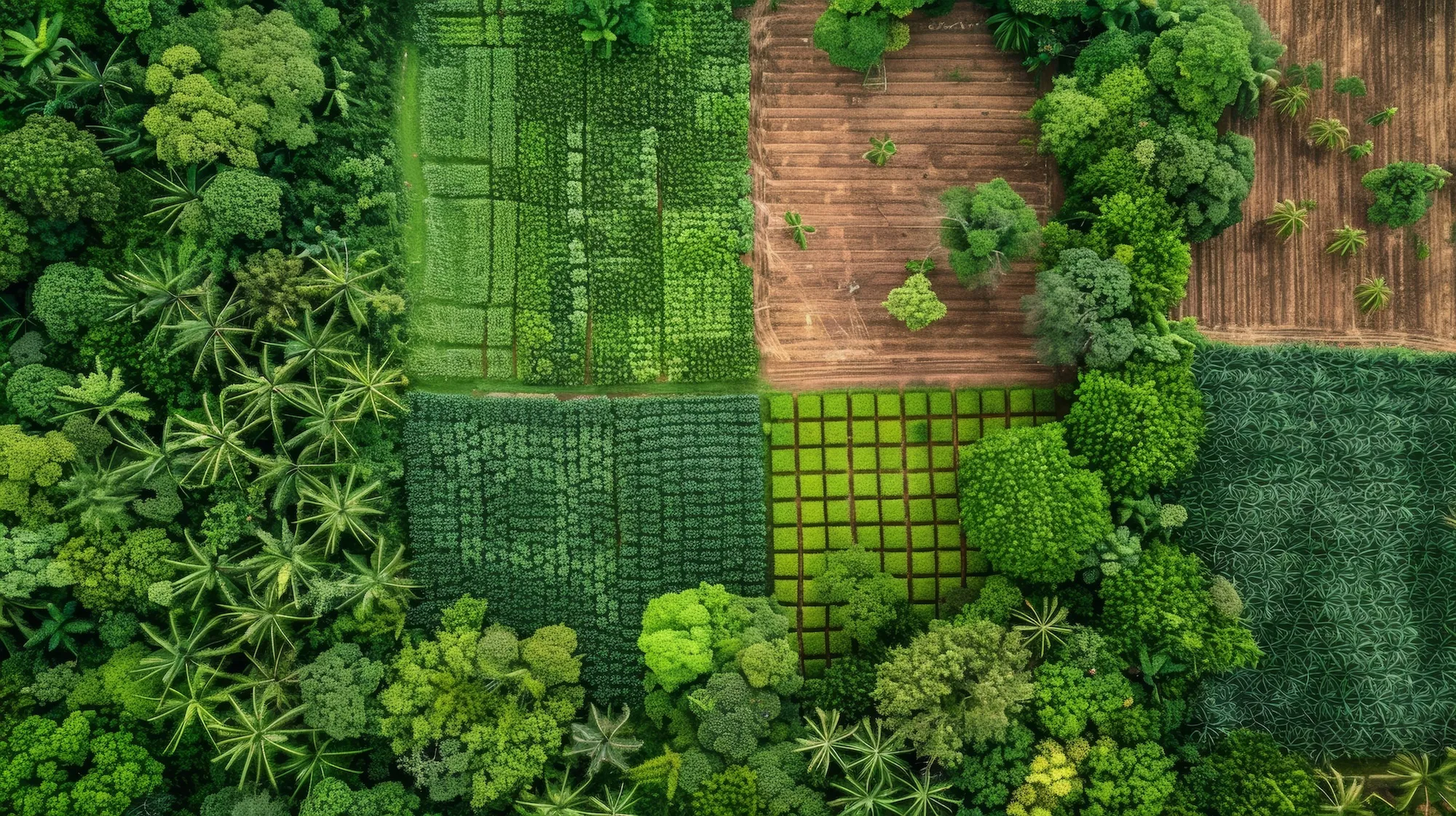


In the popular imagination, the worlds of high-growth technology startups and rural homesteading sit at opposite ends of the economic spectrum. One is associated with sleek offices, venture capital, and "moving fast and breaking things." The other calls to mind muddy boots, slow seasons, and a deep reverence for tradition.
But if you strip away the surface-level aesthetics, the operational DNA of a successful modern homestead and a lean startup is remarkably similar. Both operate under extreme resource constraints. Both require agile decision-making in the face of uncertainty. And perhaps most importantly, both are driven by a mission that goes beyond simple profit margins.
For the global community of smallholder farmers—who, according to the FAO, produce a third of the world’s food—adopting an "entrepreneurial mindset" isn't about wearing a suit or pitching to investors. It is about recognizing that your farm is a dynamic enterprise, where soil health is your capital and resilience is your greatest asset.
The Bootstrapper’s Advantage: Resourcefulness as a Currency
In the startup world, bootstrapping refers to building a business from the ground up with nothing but personal savings and the revenue from the first sales. It is a badge of honor that signifies efficiency and grit. For the regenerative farmer, bootstrapping is simply business as usual.
A startup founder might obsess over their burn rate—the speed at which they spend their limited cash before turning a profit. A homesteader manages a different kind of burn rate: the depletion of soil nutrients, water reserves, and their own physical energy.
In conventional agriculture, the solution to a resource deficit is often to "buy" a fix—importing synthetic fertilizers or pesticides. This parallels the "bloated startup" model, where problems are solved by throwing money at them. However, regenerative agriculture aligns more closely with the lean startup methodology. Instead of purchasing external inputs, the regenerative farmer innovates. They use cover crops to fix nitrogen instead of buying urea. They employ rotational grazing to manage pests instead of spraying chemicals.
This isn't just an ecological choice; it is a savvy economic strategy. A study highlights that while regenerative systems may see variable yields during the transition years, they can eventually become up to 78% more profitable than conventional counterparts. Why? Because they slash the overhead costs of inputs. In this sense, the most successful homesteaders are the ultimate bootstrappers, turning biological processes into economic value.
Agile Innovation: The Field as a Laboratory
One of the defining characteristics of a successful startup is agility—the ability to pivot quickly when a product isn't working. Corporate giants struggle to pivot because they are weighed down by bureaucracy. Similarly, massive industrial monoculture farms are like the ocean liners of the agriculture world; they are difficult to steer and slow to stop.
Small and medium-sized farms, however, are speedboats. They are uniquely positioned to be the testing grounds for agricultural innovation.
The FAO’s 2024 Science and Innovation Forum emphasized that small-scale producers are often the earliest adopters of hyper-local solutions. Just as a software developer runs A/B tests to see which website design performs better, a regenerative farmer constantly runs micro-experiments. You might plant three different varieties of drought-resistant sorghum in adjacent rows to see which thrives in your specific microclimate. You might test a new composting bioreactor on a small plot before rolling it out to the whole farm.
This data-driven approach is critical in an era of climate instability. The "product" you are selling (your crops) is subject to a volatile market (the weather). The ability to observe, orient, decide, and act—a cycle known in business strategy as the OODA loop—is what saves a harvest. When a startup pivots, they might change their target demographic. When a farmer pivots, they might switch from water-intensive maize to resilient millets in response to a forecasted El Niño year. Both are acts of survival through agility.
The Divergence: Exit Strategy vs. Legacy Strategy
While the day-to-day operations of startups and homesteads share many parallels, their ultimate horizons look very different. This is where the comparison ends, and where the unique value of the farmer shines through.
The holy grail for most startups is the "Exit Strategy"—an acquisition by a larger company or an Initial Public Offering (IPO). The goal is often to build value quickly, sell the entity, and move on to the next venture. The timeline is typically 5 to 10 years.
For the regenerative homesteader, the goal is the opposite. There is no desire to "exit." The goal is a "Legacy Strategy."
Regenerative agriculture is, by definition, a long game. Building just an inch of fertile topsoil can take decades of careful stewardship. The IPCC’s Special Report on Climate and Land highlights that sustainable land management is a generational commitment, essential for long-term food security and climate mitigation. A farmer does not improve their soil to flip the land for a quick profit next quarter; they improve it to ensure the land remains productive for their children and grandchildren.
This difference in time horizon fundamentally changes how decisions are made. A startup CEO might cut corners on customer service to boost quarterly numbers for a potential buyer. A farmer cannot "cut corners" on soil health, because the land will keep the score. If you exploit your soil today for a record harvest, you are borrowing from next year's liquidity. In agriculture, there is no such thing as "moving fast and breaking things"—because if you break the ecosystem, there is no backup server to reboot.
Resilience: The Shared North Star
Despite their different end goals, both the entrepreneur and the farmer are united by a single, non-negotiable need: resilience.
In the business world, resilience is the ability to weather market crashes, supply chain disruptions, and changing consumer tastes. In agriculture, resilience is the ability to withstand physical shocks. The CGIAR Initiative on Digital Innovation notes that digital tools and data are increasingly helping smallholders build this resilience, but the foundation remains biological.
Regenerative practices—such as agroforestry, intercropping, and no-till farming—are essentially risk management strategies. A monoculture farm is like a business with only one client; if that client leaves (or if a specific pest arrives), the business collapses. A diverse, regenerative farm is like a diversified investment portfolio. If the rains fail, the deep-rooted fruit trees might still produce even if the annual vegetables wither. If the market price for coffee drops, the farmer still has bananas, timber, or honey to sell.
This "portfolio approach" to land management creates a safety net that no insurance policy can match. It turns the farm into an antifragile system—one that doesn't just survive stress but can actually improve because of it.
The "Soil Equity" Mindset
For the Valora Earth community, viewing your farm through an entrepreneurial lens can be empowering. It shifts the narrative from "subsistence" to "management."
Think of your soil organic matter as your "equity." Every time you add compost, plant a cover crop, or practice rotational grazing, you are vesting more equity into your company. This equity pays dividends in the form of water retention, nutrient cycling, and pest resistance. It increases the valuation of your primary asset—your land—not just in monetary terms, but in biological capability.
Furthermore, smallholders can leverage their "startup" status to access new markets. Just as tech startups disrupt legacy industries, regenerative farmers are disrupting the industrial food chain. By bypassing the commodity market and selling directly to consumers—through CSAs, farmers markets, or digital cooperatives—you are capturing the full value of your innovation. You are telling a story of sustainability that big-box agriculture cannot compete with.
Conclusion: Cultivating the Future
The next time you feel overwhelmed by the complexity of managing your land, remember that you are the CEO of a sophisticated, biological enterprise. You are managing a workforce of billions (microbes), overseeing R&D (crop trials), and navigating a volatile global market (the climate).
Homesteaders and startups share the same grit, the same drive to solve problems, and the same sleepless nights. But as a regenerative farmer, you have something the average tech founder does not: a partnership with the earth itself. Your innovation doesn't just disrupt a market; it heals a landscape. And that is a venture worth investing in, season after season.