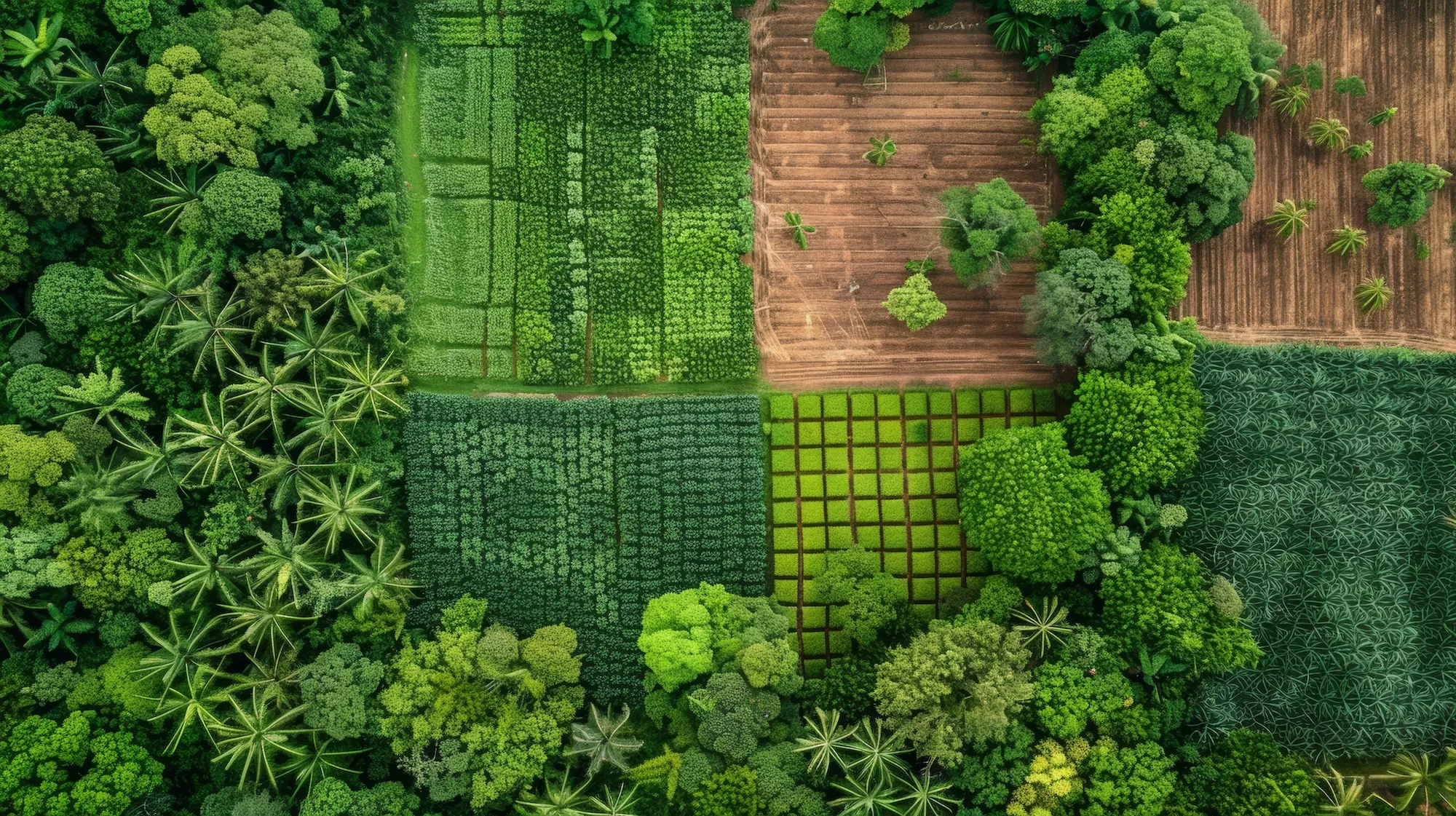


The story of the European landscape is written in its furrows. For centuries, the patchwork of smallholdings across the continent defined not just the economy, but the very culture of its people. However, the last seventy years have seen a transformation so profound that it has reshaped the biological foundations of the soil itself. Today, as we stand at a global crossroads of climate instability and food security, looking at the past, present, and future of European agriculture offers a vital roadmap for farmers everywhere who are seeking to build a more resilient future.
The Post-War Legacy: A Drive for Abundance
To understand where European agriculture is going, we must first look at where it began its modern journey. In the wake of World War II, Europe faced a desperate mandate: never again should the continent go hungry. This led to the creation of the Common Agricultural Policy (CAP) in 1962, a framework designed to ensure plentiful and affordable food for a rebuilding population.
In those early decades, success was measured by the metric of "more." Through mechanisms like guaranteed floor prices and production subsidies, farmers were encouraged to maximize every square meter of land. This era saw the rapid mechanization of the countryside, the widespread adoption of synthetic nitrogen fertilizers, and the consolidation of smaller plots into larger, more "efficient" industrial units. This "Green Revolution" approach was heralded as a triumph of human ingenuity, turning Europe from a net importer of food into a global powerhouse of agricultural exports.
However, the environmental bill was quietly accruing interest. While the CAP achieved its primary goal of food self-sufficiency, it incentivized practices that stripped the land of its natural defenses. A recent report by the European Environment Agency highlights that this period of intensive intensification led to significant soil compaction, loss of organic matter, and a steep decline in the biodiversity that naturally supports agricultural systems. For the small and medium-sized farmer, the pressure to "get big or get out" became the defining struggle of the late 20th century, often at the cost of the very soil health that sustained their families for generations.
The Present Struggle: A Continent at a Crossroads
Today, the European agricultural sector is grappling with the consequences of that legacy. We are no longer operating in a world of predictable seasons. According to the IPCC Special Report on Climate Change and Land, human-induced warming has already altered the start and end of growing seasons across Europe, bringing more frequent droughts to the south and intense flooding to the north. These shifts are not outliers; they are the new baseline for agricultural planning.
The statistics are sobering. Recent data suggests that between 60% and 70% of EU soils are currently considered unhealthy due to erosion, nutrient exceedances, or the loss of organic carbon. This degradation isn't just an environmental concern; it is a profound economic threat. It is estimated that soil degradation costs the European Union approximately €50 billion every year in lost productivity, water purification needs, and damaged ecosystem services.
For many farmers, the reality of this crisis hit home with the extreme weather of 2024. Volatile weather-related events led to a significant reduction in staple crops; for example, cereal yields across the continent dipped nearly 7% below the five-year average, while specialty crops in Central Europe faced catastrophic frost damage. These events have made it clear that the industrial model, which relies on high inputs and stable climates, is increasingly fragile.
However, this pressure is also breeding innovation. We are seeing a "Strategic Dialogue" emerge between policymakers and practitioners. The recently proposed Soil Monitoring Law represents a fundamental shift in how the continent views its land—not merely as a substrate for chemical inputs, but as a living system that requires active stewardship and protection. This legislation aims to provide a harmonized framework for monitoring soil health, giving farmers the data they need to justify more sustainable management practices.
The Policy Shift: From "Farm to Fork" to Regenerative Reality
The European Union’s Farm to Fork strategy, part of the broader Green Deal, has set ambitious targets for 2030: reducing the use of chemical pesticides by 50% and nutrient losses by at least 50%. While these targets have sparked intense debate among farming unions regarding productivity, they have also catalyzed a massive movement toward regenerative agriculture.
Regenerative agriculture is often described as a "return to the future." It combines traditional wisdom—such as diverse crop rotations and the integration of livestock—with modern soil science and data analytics. For a small farmer in Spain or a medium-sized grain producer in Poland, this transition isn't just about "being green." It is about economic survival. By reducing dependence on expensive synthetic inputs, farmers can improve their margins even if gross yields fluctuate.
A 2024 study by EIT Food on pioneering regenerative farmers in Europe found that while yields were occasionally slightly lower (around 1%) during the transition phase, these farmers used significantly fewer pesticides and fertilizers. Crucially, their fields were more resilient to heat, recording surface temperatures over 0.3°C cooler during summer months than neighboring conventional plots. This "cooling effect" of healthy, covered soil is a powerful tool for climate adaptation, acting as a natural buffer against the scorching heatwaves that have become common in the Mediterranean.
The Future: Scaling Resilience Through Technology and Tradition
As we look toward 2040 and beyond, the future of European agriculture will likely be defined by three key pillars: soil-centric management, digital integration, and a focus on the "middle" farmer.
1. Soil as a Carbon Sink
The future will see farmers being recognized—and potentially compensated—for their role as carbon stewards. The concept of carbon farming is moving from a theoretical niche to a structured policy. By increasing Soil Organic Matter (SOM), farmers can sequester significant amounts of atmospheric CO2. This creates a "win-win-win" scenario: healthier soil that holds more water, active climate mitigation, and a potential new revenue stream through carbon credit markets or public subsidies.
2. The Digital-Ready Farm
Precision agriculture is no longer just for the industrial giants. We are seeing a democratization of technology where mobile apps, satellite imagery, and low-cost sensors allow smallholders to monitor soil health and moisture in real-time. The European Commission’s upcoming digital strategy for agriculture aims to provide a "voluntary benchmarking system" that helps farmers measure their progress against sustainability goals without the burden of excessive bureaucracy. This allows for "micro-management" of nutrients, ensuring that every drop of fertilizer or water is used with surgical precision.
3. The Power of Small-Scale Producers
A 2022 FAO study emphasized that small-scale producers are the "key repositories" of agrobiodiversity. In the future, the "monoculture" mindset will likely give way to polycultural systems that are better connected to local ecologies. This shift is particularly important for regional food security, as diverse farms are more agile in the face of global supply chain disruptions. The future European farmer will likely be more of an "ecosystem manager" than a simple commodity producer.
Actionable Takeaways for the Regenerative Path
Whether you are farming in the heart of the Loire Valley or managing a smallholding in the foothills of the Carpathians, the path toward a regenerative future involves small, consistent steps. These practices are being adopted globally and are proven to restore land vitality:
- Minimize Soil Disturbance: Reducing tillage helps preserve the delicate fungal networks (mycorrhizae) that facilitate nutrient uptake and improve soil structure.
- Keep the Soil Covered: Using cover crops or "green manure" protects the soil from erosion and helps maintain moisture during extreme heatwaves.
- Diversify Your Rotations: Moving beyond a two-crop cycle breaks pest cycles naturally and improves the nutrient profile of the soil.
- Integrate Livestock Where Possible: Animals are nature’s recyclers; holistic grazing can significantly boost soil fertility and carbon sequestration.
- Invest in Data: Start tracking simple metrics like Earthworm counts or water infiltration rates. What gets measured gets managed.
A Global Perspective on a European Story
While this narrative focuses on Europe, its lessons are universal. The transition from a production-first model to a resilience-first model is happening on every continent. From the conservation agriculture leaders in Brazil to the climate-smart innovations in sub-Saharan Africa, the global farming community is rediscovering that the health of the human family is inextricably linked to the health of the soil.
European agriculture has spent the last sixty years learning that you cannot extract indefinitely from a system without eventually breaking it. The next sixty years will be about the art of restoration. For the small and medium farmers of today, this isn't just a policy change—it is an opportunity to lead a global movement that values the land as our most precious, living legacy.
By looking back at our history, we find the humility to admit what went wrong. By looking at our present, we find the urgency to act. And by looking toward our future, we find the hope that a regenerative, sustainable world is already taking root in the fields we tend today.