


The story of agriculture in the United States is often told through the lens of pure productivity—of vast cornfields and technological marvels that feed millions. But for the farmers walking the fields, the story is more intimate and more complex. It is a narrative of soil, survival, and a shifting relationship with the land. As we stand in the mid-2020s, looking back at where we have been and forward to where we are going, the American agricultural experience serves as both a cautionary tale and a blueprint for a more resilient, regenerative future.
The Root System: A Legacy of Innovation and Hardship
To understand where American agriculture is headed, we must first look at the pivotal moment that changed the nation's relationship with its soil forever. In the early 20th century, a combination of rapid mechanization and high commodity prices encouraged farmers to plow up millions of acres of native grasslands. This period of rapid expansion was seen as progress until the rains stopped in the 1930s.
The resulting Dust Bowl was perhaps the greatest man-made environmental disaster in history. It wasn't just a drought; it was the physical collapse of an ecosystem that had been stripped of its natural protections. In response, the United States Department of Agriculture underwent a radical transformation, establishing the Soil Conservation Service in 1935. This evolution of conservation policy taught the world a hard lesson: productivity without protection is a house of cards. The introduction of windbreaks, contour plowing, and the first "conservation ethic" laid the groundwork for what we now recognize as sustainable land management.
By the mid-20th century, the pendulum swung back toward intensification. The Green Revolution introduced high-yielding varieties, synthetic fertilizers, and advanced pesticides. While this era drastically increased global food security, it also normalized a "linear" approach to farming—input in, output out—that often overlooked the long-term health of the soil microbiome. For decades, the goal was to master nature; today, we are learning that the most successful farmers are those who learn to work with it.
The Tipping Point: Balancing Production and Protection
Today, the landscape of American farming is at a fascinating crossroads. According to the 2022 Census of Agriculture, the number of U.S. farms has continued to decline, yet the adoption of conservation practices is hitting record highs. For small and medium-sized farmers (SMEs), this "Present" is defined by a paradox: they face higher input costs and more volatile weather than ever before, yet they have access to advanced data and digital tools to fight back.
Regenerative agriculture has transitioned from a niche movement into a mainstream strategy for economic survival. Soil health is no longer a "feel-good" metric; it is the primary indicator of a farm’s resilience against climate change. A 2024 FAO study on land degradation highlights that nearly a third of the world’s agricultural land is degraded, but American farmers are showing that this trend is reversible.
In the present day, we see the rise of Climate-Smart agriculture initiatives. Practices that were once considered experimental—such as multi-species cover cropping and no-till farming—are now being implemented on over 100 million acres in the U.S. alone. Farmers are discovering that by reducing mechanical tillage, they can save on fuel and labor while simultaneously building organic matter that acts like a sponge, holding water during droughts and preventing runoff during floods. This is the "Current" state: a realization that the soil is a living asset that requires investment.
The Fertile Horizon: Building a Resilient Future
As we look toward 2030 and beyond, the future of American agriculture—and by extension, global agriculture—is increasingly circular. The next decade will likely be defined by three major pillars: transparency, integration, and biology.
1. The Rise of Bio-Digital Integration
The future is not just about robots; it’s about "seeing" the invisible. Advanced satellite imagery and soil sensors are now allowing farmers to monitor carbon sequestration and nitrogen levels in real-time. This allows for precision application of inputs, ensuring that nothing is wasted. For the SME farmer, this means doing more with less, using data to replace expensive synthetic fertilizers with targeted biological enhancements.
2. Market Incentives for Stewardship
We are moving toward a world where the "how" of farming is as valuable as the "what." Major food companies and government initiatives are increasingly rewarding farmers for providing ecosystem services, such as carbon storage and biodiversity. Organizations are working to scale these regenerative systems across millions of acres, creating a future where a farmer's income is diversified through both food production and environmental restoration.
3. A Return to Diversity
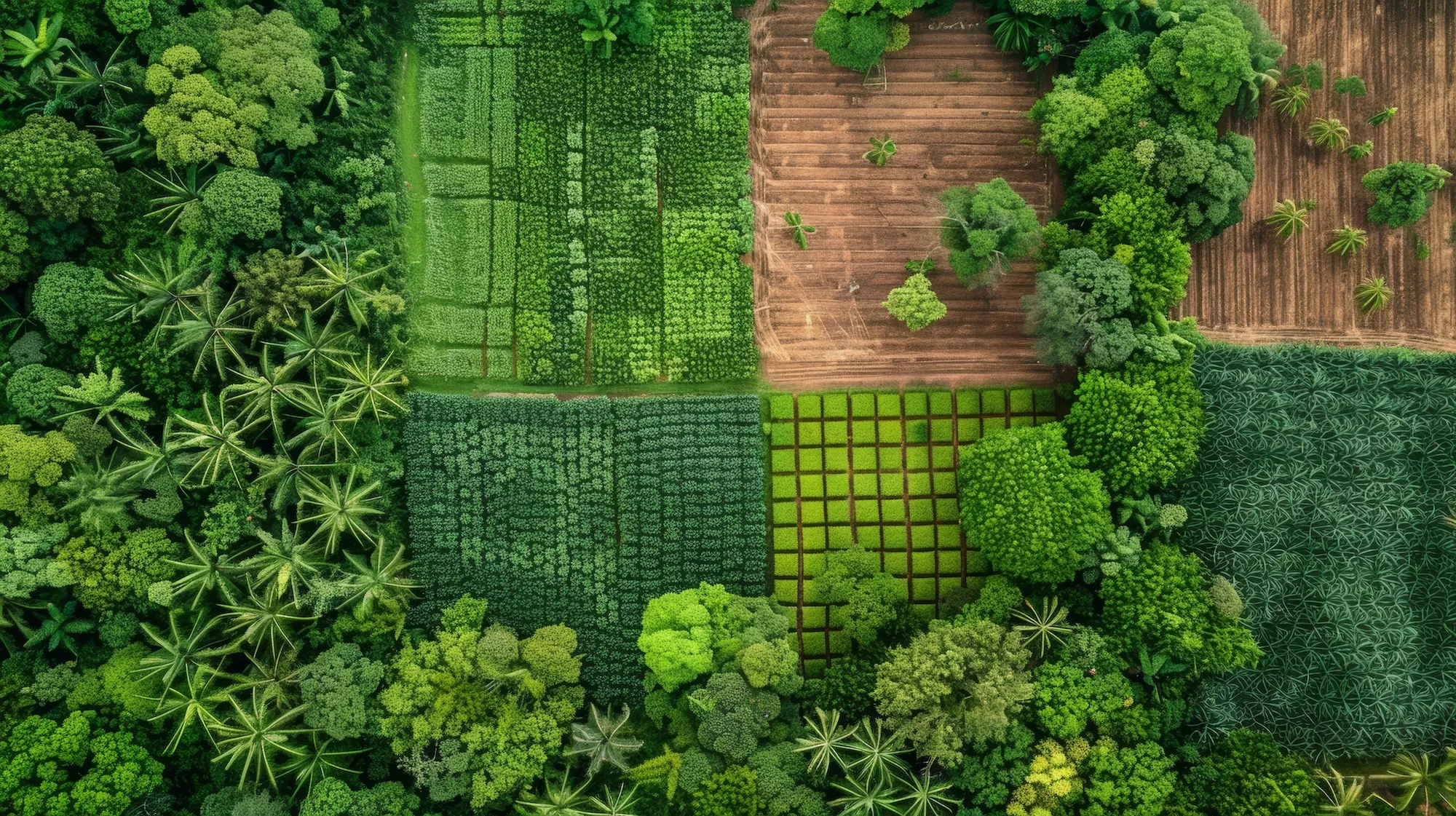
The monocultures of the 20th century are gradually giving way to more complex systems. Agroforestry, silvopasture, and diverse crop rotations are moving back into the mainstream. These systems are inherently more stable; they disrupt pest cycles naturally and create multiple revenue streams. Long-term research from the Rodale Farming Systems Trial has demonstrated that organic and regenerative systems can match or even exceed conventional yields during years of extreme weather, proving that diversity is the ultimate hedge against a changing climate.
Practical Takeaways for the Global Farmer
Regardless of where you are farming, the lessons from the American trajectory remain consistent. Transitioning to regenerative agriculture is a journey, not an overnight switch.
- Prioritize the "Armor" of the Soil: The fastest way to improve soil health is to keep it covered. Use cover crops or mulch to protect the surface from erosion and extreme temperatures.
- Minimize Disturbance: Every time soil is turned over, its structure is broken. Explore reduced tillage methods tailored to your local equipment and soil type.
- Live Roots Year-Round: Aim to have something growing in the ground as often as possible. Living roots feed the soil biology that, in turn, feeds your crops.
- Measure and Monitor: You cannot manage what you do not measure. Start with basic soil testing to track organic matter levels over time.
Conclusion: A Shared Global Legacy
The history of American agriculture shows us that while we have the power to deplete the Earth, we also have an incredible capacity to restore it. The shift toward regenerative practices is about creating a sustainable business model for the farm that can withstand the tests of the 21st century.
As we look to the future, the goal is no longer just volume, but nourishing the world through systems that are restorative. At Valora Earth, we believe the farmers who embrace these deep roots of change today will be the leaders of the global landscape tomorrow. By learning from the past and leveraging technology, we can ensure that our land remains a source of life for generations to come.


 Use Valora On-the-Go!