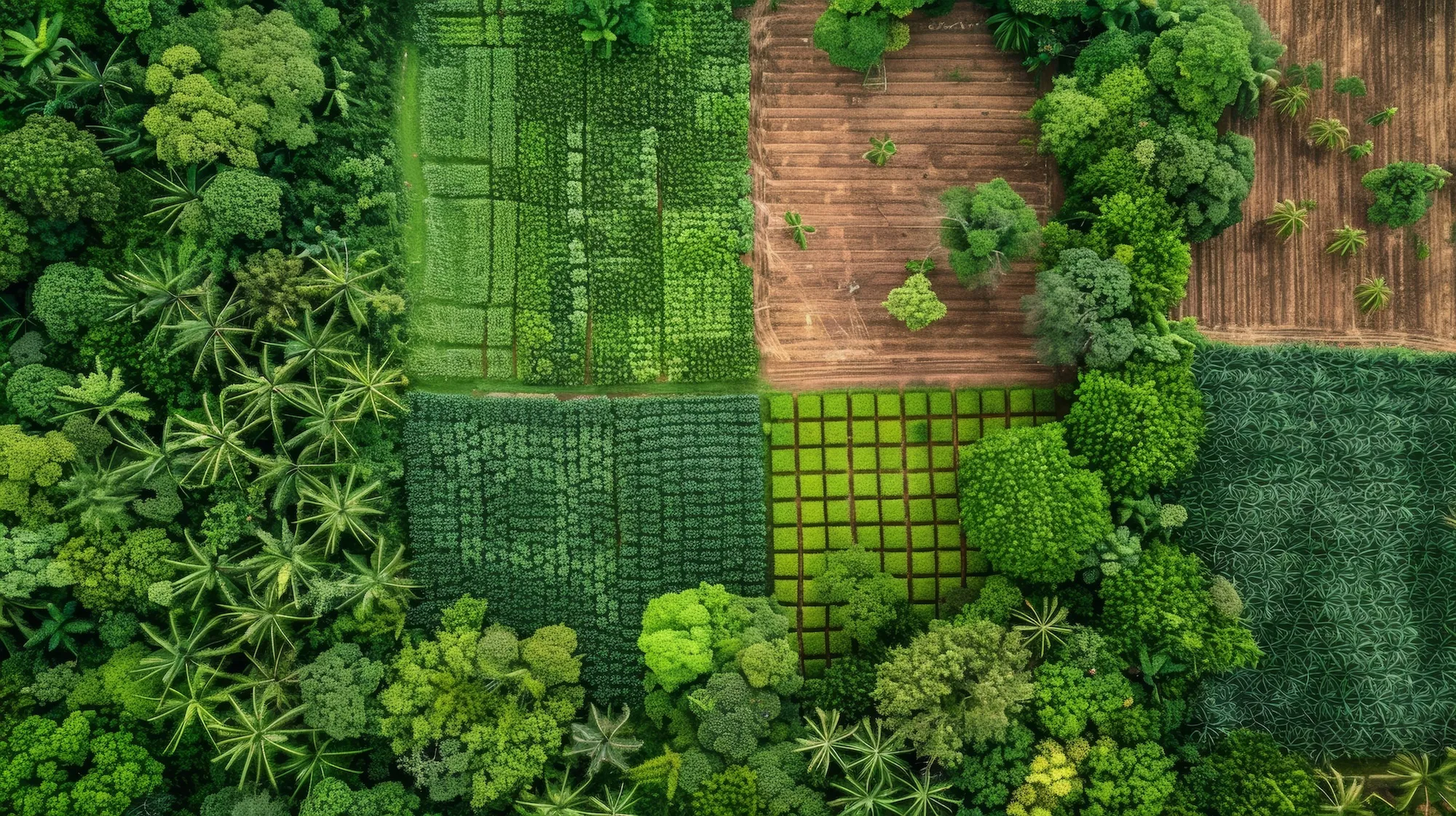


Facing the climate and market squeeze
Across the coffee-growing world, producers face the same double challenge: unstable prices and unpredictable weather. From the Cerrado Mineiro in Brazil to Colombia’s Andean slopes and East Africa’s highlands, rainfall patterns are shifting, heatwaves are intensifying, and yields are harder to predict.
But over the last decade, one approach has consistently helped coffee farmers stay productive: regenerative management, farming systems that rebuild soil function first, then harvest the rewards.
What regeneration really means for coffee
At its core, regenerative agriculture isn’t just about planting trees or reducing fertilizers. It’s about restoring the biological balance that sustains coffee — healthier soil, more stable microclimates, and stronger plants that perform even under stress.
In 2024, Reuters profiled Brazilian coffee farmers adapting to harsher seasons by shifting to regenerative management in the Cerrado Mineiro. For example, producers like Marcelo Montanari have shifted to biological inputs, diversified shade systems, and water conservation strategies. Despite an initial 20% higher production cost during transition, these farms maintained yields through droughts and reduced emissions by up to 30%.
Regenagri-certified producers report 5–25% higher productivity per hectare and improved bean quality. In practice, regeneration turns resilience into results.
Four regenerative levers that pay off
1 - Shade and agroforestry for climate balance
A growing body of research shows that intercropping coffee with trees can moderate temperature extremes, enhance soil structure and biological activity, and critically maintain or improve beverage quality in arabica. A field experiment in Minas Gerais tested coffee intercropped with timber species at different spacings and evaluated both productivity and sensory traits. Results indicate that well-designed shade systems can sustain yields while enhancing cup attributes, provided competition is managed with pruning and spacing.
2 - Ground cover for living soil
Cover crops and mulches reduce erosion, increase infiltration, and feed soil organisms that cycle nutrients back to coffee trees. The Food and Agriculture Organization highlights agroforestry and diversified systems to help mountain coffee producers build resilience, noting policy and finance gaps that when addressed can accelerate adoption at scale.
3 - Biological inputs that cut risk
In Colombia, farmers using entomopathogenic fungi and beneficial nematodes reduced insecticide costs by 13% and stabilized yields during El Niño. Biological control reduces risk, protects margins, and builds healthier ecosystems. (See: “Biological Control in Coffee Systems: Lessons from Latin America,” International Coffee Organization, accessible via ICO publications)
4 - Market access through sustainability
Regenerative certification and traceability open the door to premium and specialty markets. Research in Europe shows that consumers are willing to pay up to €1.48 per 250 g more for certified coffee — proof that sustainability can pay.
🧭 A practical roadmap for smallholders
Step 1 — Diagnose your baseline.
Assess soil health, canopy condition, and yield variability. Identify whether your main constraint is heat, disease, or water stress.
Step 2 — Design a pilot system.
Start small — 5–10% of your area — to learn and adjust. Choose shade species that add value (timber, fruit, nitrogen fixers).
Step 3 — Align practices with your cash flow.
Compare short-term and long-term economics: no shade vs. moderate shade; chemical-only vs. biological; bare soil vs. covered soil.
Step 4 — Manage for cup quality.
Regenerative systems can enhance bean density, aroma, and acidity. Balance nutrition and harvest timing to capture these gains.
Step 5 — Document and connect.
Record practices, yields, and cupping data. These are your passport to certifications, buyer programs, and climate finance.
How Valora Earth supports your journey
At Valora Earth, we believe regeneration should be measurable, profitable, and simple to plan.
Our platform helps coffee growers:
- Imagine how to improve their farm.
- Offer clear planning on how to achieve that vision.
- Help manage risk (weather, pests, prices).
- Offer instant, high quality advice along the way with our AI Assistant.
If your next harvest depends on getting these decisions right, it’s time to plan them well — and plan them with data, not guesswork.
Let’s design your regenerative pathway together.