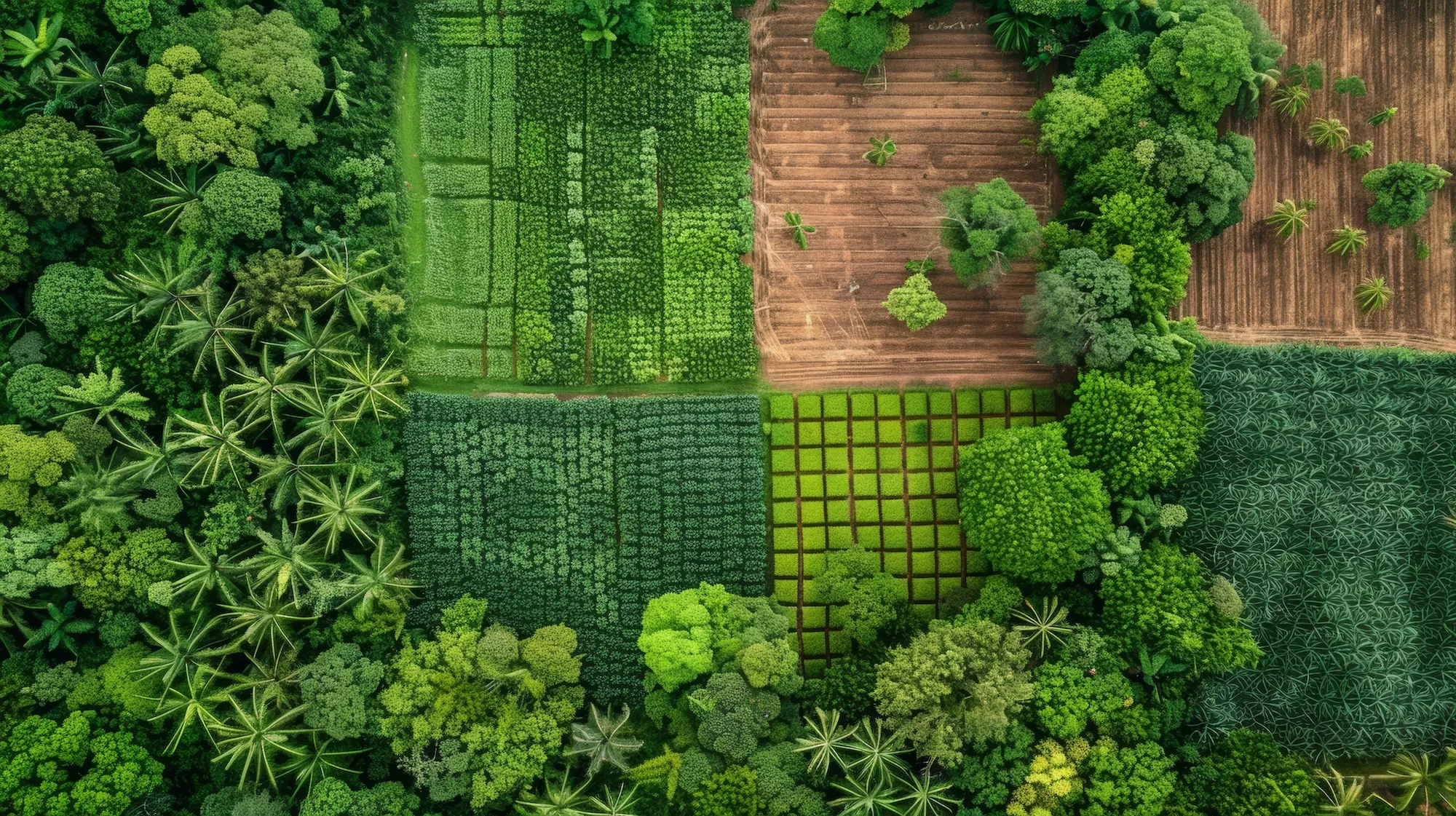


For the modern farmer, the forest at the edge of the field or the native scrubland in the back pasture has long been seen as a "legacy area" a space kept for compliance or tradition, but rarely one that contributes to the annual balance sheet. We have spent the last decade learning the language of carbon, understanding how soil health and standing trees can sequester greenhouse gases. But as the world wakes up to the staggering loss of wildlife and the collapse of vital ecosystems, a new and more complex language is emerging: the language of biodiversity finance.
The shift currently underway is profound. We are moving from a world where we simply "avoided harm" to a world where we "invest in nature-positivity." This transformation is not just a trend; it is the result of global regulatory changes and a deep-tech revolution that allows us to measure life in ways that were technically impossible just five years ago. For small and medium producers, this represents a new frontier where conservation is no longer a hidden cost or a regulatory burden, but a tradable financial asset.
The Global Framework: From COP15 to the Marketplace
The turning point for this movement was the Kunming-Montreal Global Biodiversity Framework, adopted at COP15. Often referred to as the "Paris Agreement for Nature," this historic accord set an ambitious goal: to protect 30% of the planet's land and seas by 2030. More importantly for the agricultural sector, it explicitly called for the mobilization of at least $200 billion per year in biodiversity-related funding from both public and private sources.
This regulatory framework did something revolutionary: it provided the political and economic certainty needed to transform nature into a legitimate asset class. According to the World Economic Forum, a nature-positive economy could generate over $10 trillion in annual business value. To capture this value, financial markets have developed biodiversity credits, a mechanism designed to reward the stewards of the land for the life they protect.
Biodiversity Credits vs. Carbon Markets
While they may seem similar to the carbon offsets we have grown used to, biodiversity credits are fundamentally different in their structure and intent. Carbon is a global commodity; one ton of CO2 sequestered in a Brazilian pasture is functionally identical to one ton sequestered in a European forest. Biodiversity, however, is deeply local and cannot be "commodified" in the same way.
- Metric Complexity: Carbon is measured in simple metric tons. Biodiversity is measured through a "unit of gain" in ecosystem health, which accounts for species richness, habitat connectivity, and even soil microbiology. It is a multidimensional metric that reflects the true vitality of the land.
- Nature-Positive vs. Neutrality: Carbon markets are often about "offsetting" a negative impact to reach a neutral state. Biodiversity credits, by contrast, are designed to fund net-positive outcomes. The goal is to prove that the land is demonstrably healthier, louder, and more vibrant after the farmer's intervention.
- Non-Fungibility: You cannot easily swap biodiversity in a tropical rainforest for biodiversity in a temperate grassland. This requires specialized local verification that ensures the "credit" reflects real, irreproducible ecological improvement on that specific property.
The Deep-Tech Revolution: Measuring the Unmeasurable
Historically, the biggest barrier to a functional biodiversity market was measurability. How do you prove to a bank in London or an investor in New York that a farm in the Cerrado or the African Savannah has actually increased its bird population or soil health? Traditional manual auditing sending a biologist to count species by hand was too slow, too expensive, and impossible to scale for millions of small producers.
This is where Deep Tech is stepping in. A new generation of technologies is overcoming the challenges of auditing and auditing at scale, bringing unprecedented transparency to the "life" on a farm.
Listening to the Forest: The Power of Bioacoustics
One of the most exciting innovations in this space is bioacoustics. Every healthy ecosystem has a unique "soundscape" a thumbprint of noise created by the species that live there. By placing affordable acoustic sensors in the field, startups like Greenbug and RFCX are using AI to listen to the forest.
This isn't just about recording birdsong. AI algorithms can identify specific species of birds, insects, and amphibians from thousands of hours of audio, filtering out the noise of wind or machinery. A healthy, biodiverse forest is loud and complex; a degraded one is quiet. By analyzing these soundscapes, producers can provide auditable evidence of biodiversity density and richness without ever needing an expensive expert to spend weeks on-site. This significantly lowers the barrier to entry for smallholders who want to participate in nature-based markets.
Scaling Nature Finance: Meeting Investor Standards
Investors are increasingly hungry for nature-based assets to hedge against climate risk, but they demand verifiability. For biodiversity credits to move from pilot projects to a global market, the data must be "investor-grade." This means the ecological gains must be:
- Persistent: Showing long-term improvement over years, not just a seasonal spike.
- Transparent: Open to third-party verification through immutable digital platforms.
- Standardized: Following protocols like those being developed by the Taskforce on Nature-related Financial Disclosures (TNFD), which helps businesses report and act on nature-related risks.
The World Economic Forum emphasizes that the integration of AI and bioacoustics into farm management systems is a way out to bridge the gap between rural production and global finance. When a farmer can prove that their regenerative agriculture practices have increased the "biomass of life" on their property, they gain access to a new stream of revenue that is entirely independent of their traditional crop yields.
A Roadmap for the Biodiversity-Ready Farmer
If you are a producer looking to position your land for the upcoming biodiversity credit market, the path involves moving from passive "preserving" to active "monitoring."
- Baseline Your Bio-Assets: Use remote sensing or simple bioacoustic tools to understand what lives on your land now. You cannot sell "improvement" if you do not have a documented starting point.
- Focus on Connectivity: Biodiversity thrives in corridors, not islands. Instead of isolated patches of forest, try to connect your conservation areas with those of your neighbors. High-value credits often reward habitat connectivity, as it allows species to migrate and adapt.
- Adopt Regenerative Practices: Practices like reduced tillage, integrated pest management, and agroforestry are the fastest ways to increase soil and insect biodiversity. A healthy soil microbiome is often the first indicator of ecological recovery.
- Digitize Your Records: Use a platform like Valora Earth to store your field observations and technical data. The more history and data you have, the more valuable your credits will be when the market reaches full maturity.
- Look for "Stacking" Opportunities: Many forward-thinking farmers are now "stacking" credits, selling carbon credits for the trees and biodiversity credits for the life within them. This doubles the financial utility of the same hectare of land.
The farm of the future is a sanctuary of data.
We are entering an era where the "buzz" of a healthy field is not just a sign of a good season, it is a signal to the global financial market. By embracing deep tech and the new regulatory frameworks, farmers are proving that protecting nature is the ultimate business model.