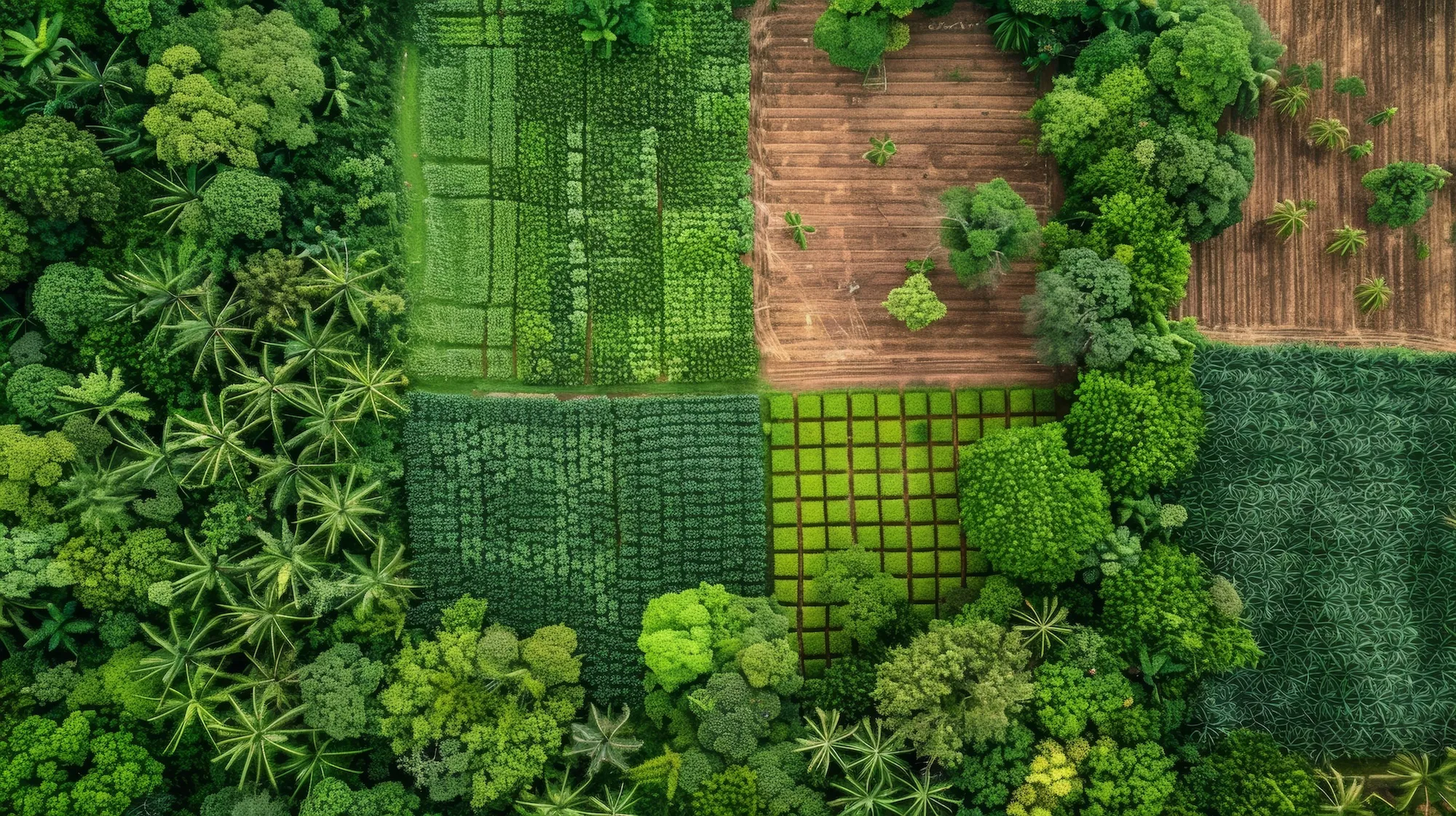


A Titan with Tight Constraints
To understand China’s agricultural landscape, you have to look at the scale of its ambition against the reality of its resources. In 2024, China’s grain output exceeded 700 million metric tons, a historic high that secures its "rice bowl" in an uncertain world.
Yet, this powerhouse status is maintained on a razor's edge.
China’s farmers face a "trilemma" familiar to many of you: shrinking arable land, water scarcity, and an aging workforce. The average Chinese farmer is now over 53 years old, and rural villages are emptying as youth flock to cities. Furthermore, the country struggles with a severe geographic imbalance—water is abundant in the south but scarce in the fertile north, requiring massive infrastructure projects just to keep crops irrigated.
Despite these hurdles, the country continues to thrive. How? By treating agriculture not just as a tradition, but as a matter of national security and scientific innovation.
The Tech Leap: From Hoes to "Smart Brains"
For a long time, the image of Chinese farming was a solitary figure in a paddy field. Today, that image is being rapidly updated. The country has embraced "smart farming" with an intensity that rivals its industrial growth.
1. The Drone Revolution
China is currently the world leader in agricultural drone adoption. In 2024 alone, over 250,000 agricultural drones were in operation, treating millions of hectares of farmland. For a smallholder farmer, owning a high-tech drone might seem out of reach. However, China has popularized a Drone-as-a-Service model. Farmers don't buy the drone; they hire a local service provider to spray crops or monitor soil health for a fraction of the cost of manual labor. It’s a shared-economy model that could be a game-changer for cooperatives in Africa and Southeast Asia.
2. AI and the "Agricultural Brain"
In provinces like Sichuan, experimental "unmanned farms" are using AI to manage the entire crop cycle. These systems, often referred to as an agricultural brain, analyze data from soil sensors and satellites to predict pest outbreaks up to a week in advance. While this sounds futuristic, the practical application is simple: precise data allows farmers to use fewer chemicals, saving money and protecting the soil.
The Green Transition: A Return to Roots?
Perhaps the most relevant shift for the Valora Earth community is China’s aggressive turn toward regenerative agriculture and sustainable land management. After decades of intensive chemical use that led to soil acidification and pollution, the government has drawn Three Red Lines to protect water resources, arable land quantity, and environmental quality.
Protecting the "Giant Panda" of Soil
In Northeast China, the coveted black soil (Chernozem) is crucial for corn and soybean production but has been thinning due to erosion. A 2024 initiative has expanded conservation tillage across millions of hectares in this region. By leaving crop residues on the field rather than burning them, farmers are seeing organic matter return to the soil—a practice that locks in carbon and boosts resilience against drought.
Integrated Soil-Crop Management
A massive study involving millions of smallholders found that optimizing the timing and placement of fertilizer could increase yields by 11% while cutting fertilizer use by 15%. This "do more with less" approach—known as Integrated Soil-Crop System Management (ISSM)—is now a cornerstone of China's green strategy. It proves that sustainability isn’t just about being "organic"; it’s about hyper-efficiency that benefits the farmer's bottom line.
Global Lessons for the Smallholder
So, what can a coffee grower in Colombia or a maize farmer in Nigeria take away from China’s experience?
- The Power of Cooperatives: China’s smallholders (who farm an average of less than two acres) are increasingly organizing into cooperatives. This allows them to access those high-tech drones and negotiate better prices, proving that you don’t need to be a corporate giant to access modern tools.
- Embrace "Frugal Innovation": You don't always need to own the machinery. Look for shared-service models in your region that allow you to rent access to precision tools.
- Soil Health is Wealth: China’s pivot to protecting its black soil highlights a universal truth—degraded land yields no profit. investing in cover crops and residue retention is a long-term savings account for your farm.
Looking Ahead
China is heading toward a future where digital villages connect the remotest farms to urban markets via e-commerce, ensuring that the farmer captures more value from their produce. It is a vision where technology and ecology attempt to find a balance.
For the rest of us, China serves as both a mirror and a map. It shows the severe consequences of pushing nature too hard, but also the incredible capacity of human ingenuity to restore it.