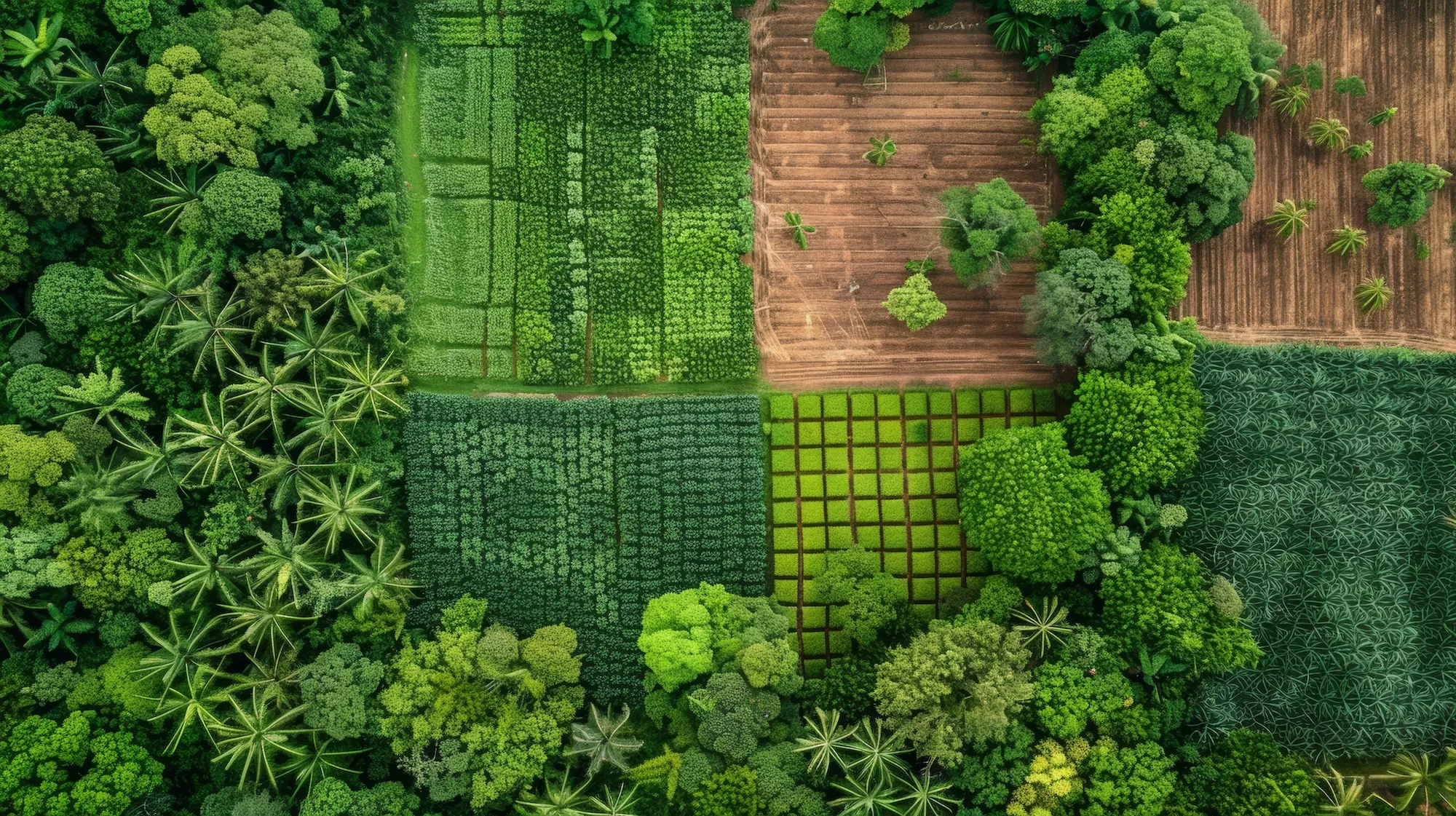


The agricultural world in 2026 feels remarkably different than it did even three years ago. We have moved past the era of viewing the farm as a factory and have returned to seeing it as a living, breathing ecosystem. For small and medium-sized farmers, this year is not just about putting seeds in the ground; it is about managing a complex web of climate volatility, shifting input costs, and a digital revolution that has finally become practical for the everyday grower.
According to recent World Bank projections, global agricultural markets are stabilizing, yet profitability now depends more on resource efficiency than sheer volume. While global grain production remains robust, the "double shock" of rising energy costs and supply chain fluctuations means that regenerative agriculture is no longer just an environmental choice—it is an economic necessity.
The 2026 Climate Pulse: Adapting to the New Normal
Climate change is no longer a "future threat"—it is the daily operating reality for every farmer on the planet. As we enter the 2026 growing season, the World Meteorological Organization has noted that extreme weather patterns are becoming more frequent and intense, requiring a fundamental shift in how we manage water and heat stress.
In many regions, we are currently navigating a weak but persistent La Niña cycle. For farmers in Argentina and the U.S. Gulf Coast, this typically means drier-than-normal conditions, while parts of Southeast Asia may face increased moisture. The key for 2026 is flexibility. We are seeing a global shift toward "weather-informed scheduling," where farmers use hyper-local data to time their planting and irrigation to the hour, rather than the week.
Regenerative practices like cover cropping and reduced tillage have proven their worth here. By increasing soil organic matter, farmers are finding their land can store significantly more moisture. A landmark IPCC report on climate change and land highlights that sustainable land management is one of our most effective tools for both mitigating and adapting to these climate swings.
The Biological-First Revolution
One of the most significant shifts in 2026 is the mainstreaming of biologicals. We have moved away from "general-purpose" synthetic fertilizers toward high-tech bio-stimulants, nitrogen-fixing microbes, and bio-pesticides. This transition is critical as the FAO emphasizes soil health as the foundation of future food security.
For the smallholder farmer, this means 2026 is the year to trial "biological-first" nutrient programs. These products are no longer experimental; they are calibrated for specific crops and soil types. When paired with diverse crop rotations, these biological tools help break pest cycles and naturally enrich the soil. Research from the Rodale Institute has long demonstrated that organic and regenerative systems can compete with conventional yields during drought years precisely because of this improved biological activity.
Furthermore, academic research published in Nature suggests that microbial diversity in the rhizosphere—the area around plant roots—is the primary driver of nutrient uptake efficiency. By fostering these underground partnerships, farmers can reduce their dependency on expensive chemical interventions that often degrade long-term land value.
AI: Your New Conversational Agronomy Assistant
For years, "AgTech" felt like a buzzword reserved for large-scale industrial farms. In 2026, that has changed. Artificial Intelligence has moved from "under the hood" of complex software to becoming a practical, conversational assistant for farmers. The CGIAR Digital Innovation Initiative has been instrumental in bridging the gap, ensuring that these tools reach smallholders in developing regions.
New AI tools now allow farmers to "talk" to their farm data. Instead of looking at a complex dashboard of satellite imagery, a farmer can ask their phone: "Which section of my north field is showing water stress, and should I apply nutrients today or wait for the rain on Tuesday?"
The International Food Policy Research Institute (IFPRI) notes that while global food production is increasing, the gap in technology access for smallholders remains a challenge. However, the rise of "modular robotics" and task-specific automation—like autonomous weeders that can be leased rather than bought—is finally bringing precision agriculture to the medium-sized farm.
The Carbon Harvest: Getting Paid for Stewardship
In 2026, your soil is no longer just a medium for growing crops; it is a financial asset. The global carbon credit market is expanding rapidly, and the USDA's conservation programs are increasingly aligning with private markets to reward farmers for sequestering carbon.
For many farmers, this has created a "second harvest." By adopting regenerative practices—such as agroforestry or no-till farming—growers can generate high-integrity carbon credits. The shift in 2026 is toward transparency. Blockchain-based tracking and satellite-driven monitoring have made it easier for smallholders to prove their carbon sequestration, allowing them to tap into global markets that were previously out of reach.
A study on carbon sequestration potential indicates that agricultural soils could sequester several billion tons of carbon dioxide annually if managed correctly. This makes the farmer a central player in global climate strategy. At Valora Earth, we see this as an opportunity for farmers to transition from commodity producers to ecosystem service providers.
Diversification: The Best Hedge Against Uncertainty
If there is one lesson 2026 has taught us, it is that monocultures are a high-risk gamble. Global markets are rewarding diversity. We are seeing a surge in demand for climate-resilient crops like millet, sorghum, and ancient grains. These crops often require fewer inputs and are naturally more resistant to the pests that thrive in a warming world.
The Stockholm Resilience Centre warns that we are operating outside several safe planetary boundaries, particularly concerning biodiversity loss and nutrient runoff. Diversifying your crop portfolio isn't just about market risk; it's about ecological survival.
Furthermore, regional value-added processing is on the rise. Rather than just selling raw commodities into a global supply chain, more small and medium farmers are joining cooperatives to process their crops locally. This trend is supported by OECD agricultural indicators which show that localized value chains often provide better returns for the producer while reducing the carbon footprint of food transport.
Regional Snapshots: A Global Perspective
While the principles of regenerative agriculture are universal, their application varies by geography. In 2026, we are seeing distinct trends emerge across different continents:
- Sub-Saharan Africa: Farmers are leading the charge in agroforestry integration, using nitrogen-fixing trees to shade crops and restore degraded lands. This has led to a significant increase in resilience against the erratic rainfall patterns now common in the region.
- Latin America: A major focus has shifted toward "Silvopasture"—combining forestry and grazing. This practice, supported by Global Center on Adaptation initiatives, is helping livestock farmers maintain productivity while reducing the heat stress on their animals.
- Europe: The EU Soil Strategy for 2030 is driving a massive transition toward reduced chemical usage. European farmers are increasingly using precision-targeted biologicals to meet stringent environmental regulations while maintaining high yields.
2026 Checklist: Actionable Steps for Your Farm
To thrive in the current landscape, consider these three priorities for the remainder of the year:
- Prioritize Soil Health Monitoring: Use affordable soil sensors or satellite-based monitoring to get a baseline of your organic carbon. This is the first step toward qualifying for carbon payments and understanding your land's true potential.
- Integrate Biologicals: Start by replacing 10–20% of your synthetic nitrogen with a bio-stimulant or microbial inoculant. Monitor the results to see if you can maintain yields with lower input costs.
- Invest in Diversity: Dedicate a small portion of your land to a new, climate-resilient crop or an agroforestry project. This "insurance policy" will provide data on what works best for your specific microclimate.
Looking Ahead
The year 2026 is a bridge between the traditional farming of the past and the regenerative, data-driven agriculture of the future. While the challenges—climate shifts, input volatility, and geopolitical stress—are real, the tools available to manage them have never been more effective or accessible.
The Global Center on Adaptation stresses that the window for building agricultural resilience is narrowing, but the innovations of 2026 provide a clear path forward. At Valora Earth, we believe that the most successful farmers of this decade will be those who view themselves as stewards of a living system. By focusing on soil health, embracing practical technology, and diversifying income through carbon markets, small and medium-scale farmers can not only survive this year but lead the way into a more resilient global food system.