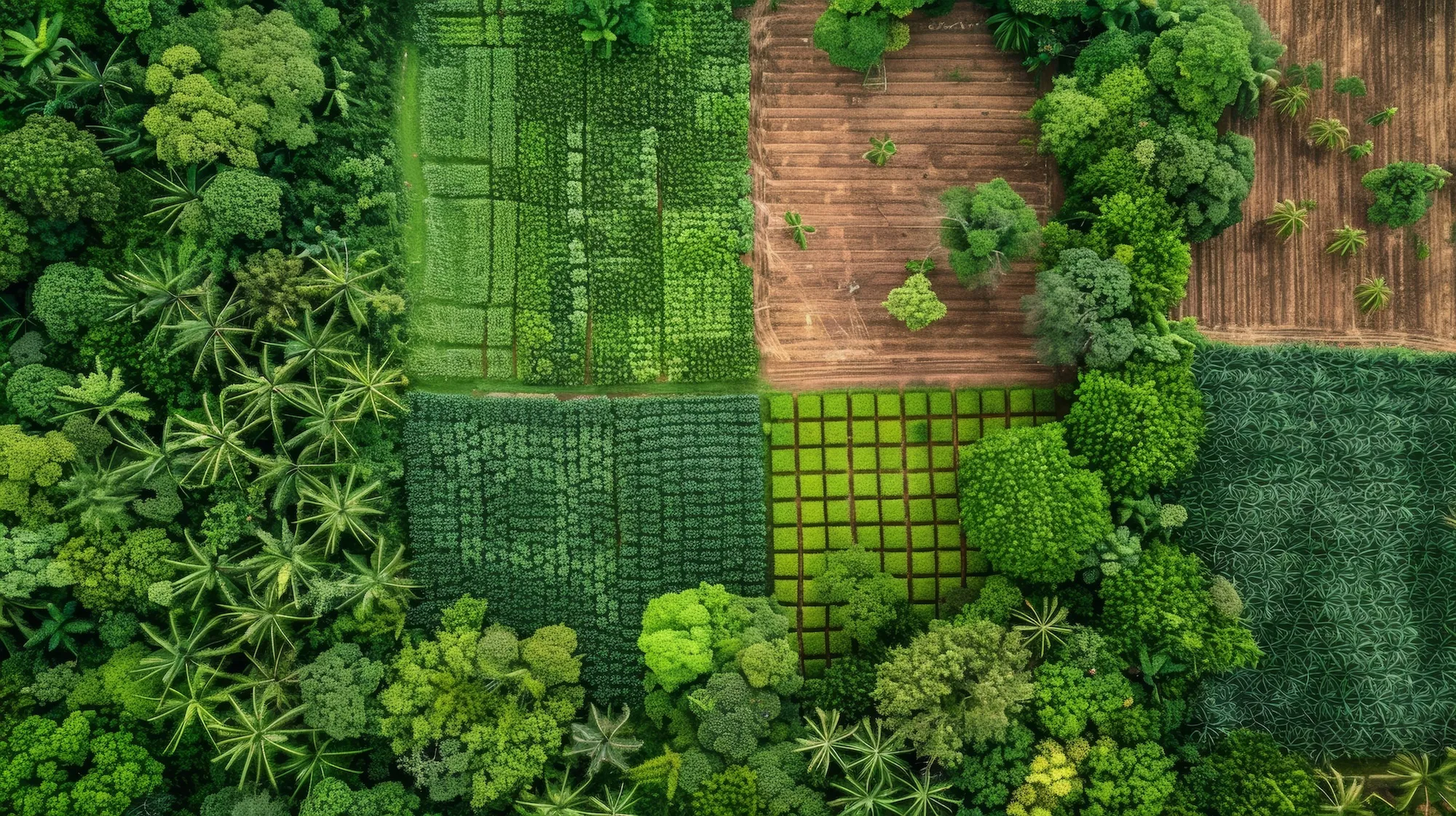


Walk onto a typical modern farm, and you will likely see one of two things: endless rows of silent crops or concentrated pens of livestock. Rarely do you see them together. This "Great Separation" was designed for efficiency, allowing farmers to specialize and scale. But in simplifying the farm, we broke the biological engine that powered agriculture for millennia.
In a natural ecosystem, plants and animals are partners. Plants feed the animals, and animals feed the plants. When we sever this link, we replace biological fertility with chemical fertilizer and biological pest control with pesticides.
Now, a growing movement of small and medium-sized farmers worldwide is orchestrating a "Great Reunion." This practice, known as Integrated Crop-Livestock Systems (ICLS), is proving to be a powerful tool for regenerating degraded land and stabilizing farm income. But it is not as simple as opening the gate and letting the cows run loose. It requires design, management, and a clear understanding of the risks.
The Case for Integration: Why Complicate Your Life?
Adding livestock to a cropping operation undoubtedly adds complexity. So, why are pragmatic farmers doing it? The answer lies in resilience.
1. The Fertilizer You Don't Have to Buy
The most immediate benefit is nutrient cycling. In a specialized cropping system, you export nutrients (grain) and import fertility (urea/DAP). Animals close this loop. When livestock graze on cover crops or residues, they return 80–90% of the nutrients to the soil in the form of manure and urine. A review by the FAO confirms that well-managed integration significantly increases nutrient use efficiency, reducing the need for synthetic inputs that drain farm profits.
2. Biological Weed and Pest Control
Livestock are mobile, self-powered mower-shredders. By grazing cover crops or post-harvest residues, they terminate weeds before they set seed and disrupt the habitats of crop pests. In organic systems, this biological tillage is a game-changer, reducing the need for diesel-hungry mechanical cultivation.
3. Economic Shock Absorbers
Farming is a gamble against weather and markets. If you only grow maize and a drought hits, you lose everything. But if you also raise sheep or cattle, the failed crop becomes livestock feed. Research from the CGIAR on mixed farming systems shows that diversification acts as a powerful buffer, stabilizing household income even when grain markets crash or rains fail.
The Challenges: It’s Not All Green Pastures
Before you buy a herd, it is vital to respect the hurdles. Integration is a management-intensive strategy that introduces new variables to your operation.
1. The Fear of Compaction
The most common worry for crop farmers is: Won't the animals pack down my soil? It is a valid concern. Hooves on wet clay can cause severe compaction, damaging future root growth. However, studies from the University of Florida suggest that with proper management—specifically, avoiding grazing during heavy rains and maintaining high residue cover—livestock actually improve soil structure over time by stimulating root growth and microbial activity.
2. The Infrastructure Gap
If your farm was designed for tractors, it probably lacks the two things animals need most: fences and water. Building perimeter fences and installing watering systems is a significant upfront capital cost. Many regenerative farmers solve this with portable electric fencing and mobile water tanks, but this trades capital cost for labor time.
3. Food Safety Regulations
For farmers growing fresh produce (lettuce, strawberries, etc.), food safety is critical. In the United States, the Food Safety Modernization Act (FSMA) and Good Agricultural Practices (GAP) generally require a 90 to 120-day interval between the application of raw manure (grazing) and the harvest of crops involved. This requires careful scheduling to ensure animals are off the land long before the harvest window opens.
How to Start: A Roadmap for Reintegration
You don't need to transform your entire farm overnight. The most successful transitions happen in phases.
Phase 1: The "Matchmaker" Model
You don't have to own the animals to get the benefits. Many grain farmers partner with neighboring livestock producers. You provide the winter forage (cover crops), and they bring the cattle. They get free high-quality feed; you get free manure and weed control. It’s a low-risk entry point that requires minimal investment.
Phase 2: Grazing the "Hidden Season"
In many tropical and temperate regions, fields sit bare between cash crops. This is your window. By planting a diverse cover crop mix (like rye, vetch, and radishes) immediately after harvest, you create a high-quality pasture. The USDA Natural Resources Conservation Service (NRCS) provides extensive guides on selecting cover crop mixes that maximize forage weight while fixing nitrogen for the next crop.
Phase 3: Adaptive Grazing Management
To prevent compaction and maximize soil health, treat your animals like a tool. Do not let them roam the whole field for months. Use portable electric wire to create small paddocks, moving the animals daily or every few days. This high-density, short-duration grazing mimics wild herds, ensuring even manure distribution and preventing overgrazing of palatable plants.
Global Success Stories
This isn't just theory; it is practice on millions of hectares.
- Brazil: The massive adoption of Integrated Crop-Livestock-Forest (ICLF) systems involves rotating soybeans with pasture grasses and eucalyptus trees. Data published in Frontiers in Sustainable Food Systems indicates these systems can be more profitable than monocultures while restoring degraded Cerrado land.
- Australia: The tradition of mixed farming (crop-pasture rotation) has long been the backbone of the wheat belt, allowing farmers to rest cropping paddocks as legume-based pastures that recharge soil nitrogen for future grain years.
Conclusion: Closing the Circle
Adding animals to a cropping system is a journey of observation. It asks you to stop seeing your farm as a factory and start seeing it as an ecosystem. The fences and the water lines take work, and the learning curve can be steep. But the reward is a farm that is alive—a system where waste becomes food, risks are spread, and the land gets better with every season.
Start small. Maybe it’s just 10 acres of cover crop and a neighbor’s borrowed herd. Watch the soil. Watch the weeds. You might just find that the missing piece of your cropping puzzle has four legs.