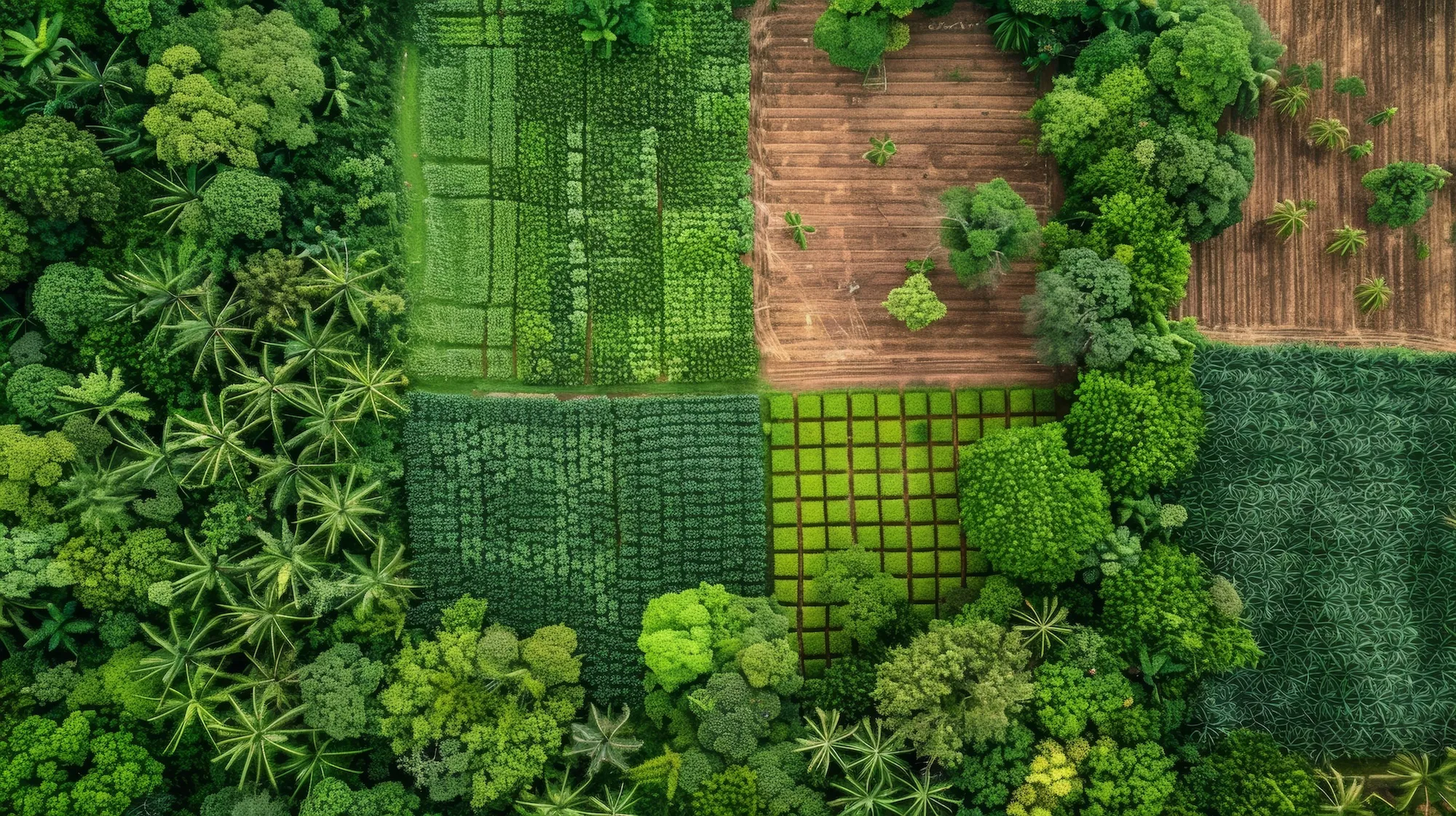


Beneath the feet of every farmer lies a hidden universe an intricate network of fungi, bacteria, and minerals that dictates the success of every harvest. For decades, the global focus remained squarely on what we could extract from the ground. However, as rainfall patterns become increasingly erratic and synthetic input costs climb, the narrative is shifting. For the modern producer, the priority is no longer just extraction; it is soil health.
According to the FAO, nearly one-third of the world’s soil is already degraded. This isn't just an environmental tragedy; it is a profound economic one. Degraded land is inherently less efficient; it requires more water, more chemicals, and yet delivers lower, more volatile yields. To reverse this trend, we are seeing the rise of regenerative agriculture, a system designed to rebuild soil organic matter and restore lost biodiversity. But for a small or medium-sized producer, the transition can feel like a high-stakes gamble. The answer to scaling this transition lies in the seamless integration of emerging technology with practical, decision-oriented workflows.
The Digital Diagnosis: Sensors and Remote Sensing
The first step in any regenerative journey is understanding the baseline. Historically, soil testing was a slow, expensive process involving physical samples sent to distant labs, with results arriving long after the critical decision window had closed. Today, technology is bringing the lab directly to the field.
Emerging technologies like soil sensors and remote sensing are providing farmers with real-time data on moisture, nutrient levels, and carbon sequestration. Satellite imagery now allows a producer to see "stress maps" of their land from a smartphone, identifying exactly which hectares need attention and which are thriving. This precision is the bedrock of regeneration. Instead of blanket-applying fertilizers which often disrupts soil biology and wastes capital farmers can use data to apply exactly what is needed, only where it is needed.
This data-driven approach is particularly effective in diverse agroecological contexts. Whether in the tropical soils of Southeast Asia or the temperate plains of North America, these tools allow farmers to move away from guesswork. The World Economic Forum emphasizes that a digital twin of the farm allows for simulations that predict how specific regenerative practices, like cover cropping or no-till farming, will perform over several seasons before the first seed is even planted.
Biological Inputs: Feeding the Soil Life
If sensors are the eyes of the regenerative farmer, biological inputs are the engine of restoration. We are moving into an era where "feeding the plant" is seen as secondary to "feeding the soil."
Innovative biologicals including mycorrhizal fungi, nitrogen-fixing bacteria, and advanced compost extracts are being used to jumpstart dormant soil life. These are not merely alternatives to synthetic chemicals; they are active tools for building a self-sustaining ecosystem. Research from CGIAR suggests that when these biological inputs are paired with digital monitoring, the recovery rate of degraded soils accelerates significantly. This synergy allows farmers to track exactly how microbes improve soil structure and water retention, providing the evidence needed to justify a permanent shift away from conventional, high-input models.
Breaking the Scale Barrier: From Pilots to Profits
One of the greatest challenges in regenerative agriculture is the "pilot trap." Many farmers start with a small experimental area and see positive environmental results, but they often struggle to scale those practices to the rest of the operation because they fear for their immediate profitability.
To move regeneration from an isolated project to a scalable farming practice, it must be integrated into economically viable workflows. This means that soil health data must be translated into financial forecasts. As McKinsey Sustainability notes, the ROI of sustainable farming often becomes fully visible after the third year, during the "transition valley." Technology helps bridge this gap by optimizing resource use in the short term. By using AI to analyze soil data, farmers can reduce input costs immediately, providing the cash flow buffer needed to see the soil regeneration process through to full maturity.
Overcoming the Adoption Hurdle: Knowledge and Confidence
Despite the clear benefits, adoption remains slower than it should be. The barriers are well-documented: high initial costs, significant knowledge gaps, and, most importantly, a lack of decision confidence. A farmer might have a mountain of soil data but still feel uncertain about what specific action to take on a Monday morning when the weather forecast shifts.
The transition to regenerative agriculture is a steep learning curve. It requires a shift in mindset from "eradicating pests" to "managing ecosystems." This complexity can be paralyzing without the right support. Farmers need more than raw data; they need actionable guidance. They need a way to translate complex soil sensors and remote sensing data into a simple, prioritized "to-do" list.
The AI Assistant: Bridging the Implementation Gap
This is where AI-based virtual assistants are fundamentally changing the game. These assistants act as a unifying layer, pulling data from disparate sources weather stations, soil sensors, and market prices and translating it into clear, simple advice.
The OECD has highlighted that digital assistants can significantly lower the risk of farm transitions by providing a second opinion based on millions of data points from similar contexts. This is exactly where Valora Earth provides its greatest value.
Valora Earth is specifically designed to solve the knowledge and confidence gap that stops many small and medium producers from taking the leap. Our platform serves as a digital bridge between complex soil science and daily farm management:
- Instant Agronomic Advice: Our AI virtual assistant offers high-quality guidance on how to apply biological inputs or manage cover crops. For a farmer who might not have access to an on-site consultant, this is a revolutionary tool for daily task management.
- Proactive Risk Reduction: By providing clear planning and forecasting, Valora Earth helps the producer manage the financial risks of the transition. The platform ensures that the farmer is using the best financial and technical information to avoid costly mistakes during the sensitive transition years.
- Building a Transparent Data History: One of the hardest parts of scaling is proving success to banks or buyers. Valora Earth helps you document your journey, creating a verifiable record of your soil’s improvement making it significantly easier to access green finance or premium specialty markets.
By making regenerative practices simple and data-driven, technology moves from being an expensive toy to a fundamental necessity for farm survival and growth.
Systemic Impact: Feeding the Future
Scaling soil regeneration isn't just about individual farm profits; it is a global necessity. The IPCC identifies soil as one of the most critical carbon sinks we have. By restoring degraded land at scale, we aren't just securing food; we are mitigating climate change.
When millions of small and medium producers utilize technology to rebuild their land, the cumulative effect is a more resilient global food system. We move from a world of "fragile yields" to one of stable abundance. This systemic shift is only possible if the tools for regeneration are accessible, affordable, and, above all, simple to use.
A Practical Roadmap for Soil Regeneration
If you are a producer ready to move from pilot to scale, here is a roadmap to guide your technological transition:
- Baseline Your Land Digitally: Do not rely on memory or outdated maps. Use remote sensing and initial soil sensors to create a digital map of your farm's current health. Identify your most degraded areas and prioritize them for intervention.
- Focus on "Low-Hanging Fruit" Inputs: Start with biological inputs that have a fast ROI, such as nitrogen-fixing bacteria, to reduce your reliance on expensive chemical fertilizers immediately.
- Integrate a Decision Support Layer: Use a platform like Valora Earth to manage the daily complexity. Let the AI help you decide when to plant, when to prune, and how to manage your new regenerative inputs.
- Monitor, Measure, and Adjust: Soil regeneration is a biological process, not a mechanical one. Use your digital tools to track small wins like a 1% increase in water retention to maintain your confidence during the transition.
- Connect with the Market: Use your documented soil health data to differentiate your product. In today’s market, a "regenerative bean" or "sustainable coffee" carries a premium value that can only be captured with verifiable data.
The path to a resilient farm starts in the soil.
Technology is the tool that allows us to see what the ground truly needs and the bridge that makes the transition profitable. Whether you are battling drought in the Cerrado or seeking to improve bean quality in the highlands, the regenerative future is within your reach and it is powered by data.